The best bathroom sink for your bathroom depends first on the installation style — vessel, undermount, or drop-in — and second on the material. After 10 years installing bathroom sinks alongside countertops, the honest summary: undermount sinks are the most popular and most practical for daily use, vessel sinks are the design statement, and drop-in sinks are the budget-friendly DIY-friendly classic. Below are five strong picks across categories — ceramic, glass, and porcelain — plus the buying considerations that determine whether a sink fits your countertop and your real life.
The 3 Bathroom Sink Installation Types
Before picking a specific sink, pick the installation style. The three options behave very differently in daily use.
Vessel Sinks (Above-Counter)
The basin sits on top of the vanity like a bowl. Pros: dramatic, sculptural, the design-statement choice for spa-like or modern bathrooms; only one hole needed in the counter (for drain and tall faucet); easy to swap later. Cons: grime collects where the basin meets the counter; the basin sits taller, so faucet height matters and kids may struggle; cleaning is more involved than other types. Material range is huge — ceramic, glass, stone, concrete-look composites. Angi’s vessel sink guide covers the full breakdown.
Undermount Sinks (Below-Counter)
The basin mounts underneath the countertop with no rim showing. Counter water sweeps cleanly into the bowl. Pros: easiest to clean (no rim to trap grime), modern built-in look, the most common choice for new builds and serious remodels. Cons: more expensive than drop-in, requires a stone or solid-surface counter (laminate doesn’t work for undermount), and the silicone seal at the rim needs periodic replacement (every ~5 years).
Drop-In Sinks (Top-Mount)
The traditional sink — the rim sits on top of the counter and the basin “drops in” from above. Angi’s undermount-vs-drop-in guide covers cost and install differences in more depth. Pros: least expensive, works with any countertop material including laminate and tile, DIY-installable. Cons: the rim interrupts the counter visually and collects soap, water, and dust; reads more traditional than current; harder to wipe-clean.
Best Bathroom Sinks: Top Picks
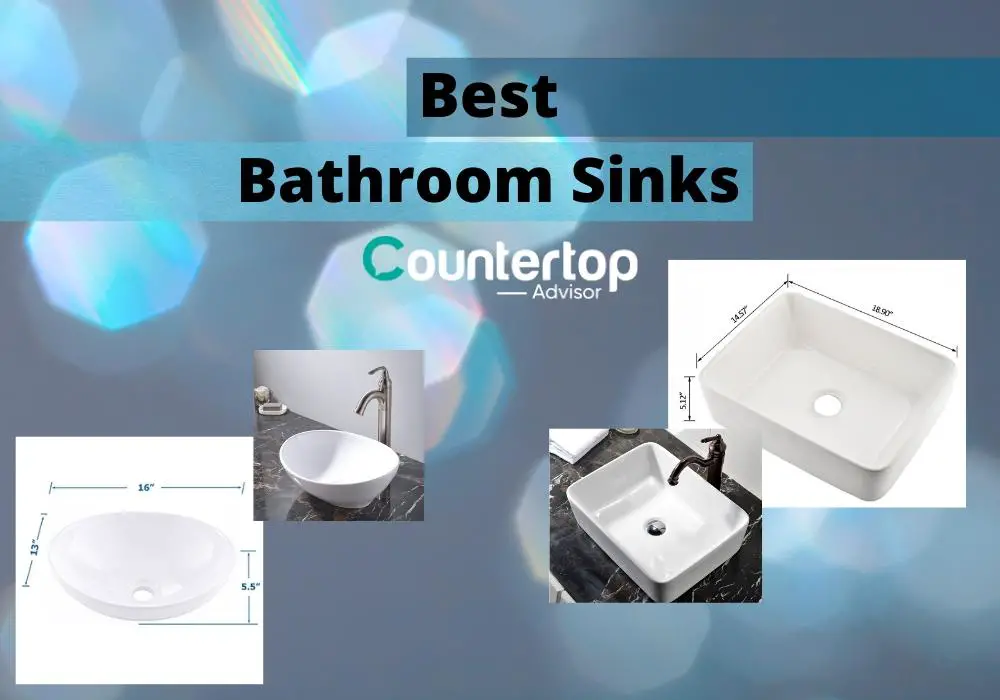
1. VCCUCINE Rectangle Above-Counter Porcelain Vessel Sink
A clean modern rectangular vessel in white porcelain. Works in contemporary and transitional bathrooms; the rectangular footprint is more usable than round vessels for everyday handwashing. Solid porcelain, easy to clean compared to glass or textured stone. Good entry-level vessel choice.
2. Kingo Home Above-Counter White Porcelain Sink
A versatile white porcelain vessel in classic rounded styling. Pairs well with both modern and traditional bathrooms. Porcelain is durable, non-porous, and resistant to staining and chemicals — the most low-maintenance vessel material.
3. Miligore Modern Glass Vessel Sink
Tempered glass vessel for a dramatic statement look. Available in clear and tinted finishes that catch light. The trade-off: glass shows water spots and streaks more readily than porcelain, so it needs more frequent wiping to look its best. Best for low-traffic powder rooms where the aesthetic matters most.
4. Luxier Porcelain Ceramic Vessel Sink
Premium porcelain ceramic vessel with a substantial wall thickness and clean finish — reads higher-end than the entry-level options. Available in multiple shapes. Reliable mid-range pick.
5. Wall-Mounted Rectangle Corner Sink
For small or awkward bathrooms (powder rooms under the stairs, narrow half-baths), a wall-mounted corner sink is a real space-saver. Mounts to the wall with no vanity needed; the counter is essentially the sink itself. Different installation category than the vessel/undermount/drop-in trio but worth considering when square footage is tight.
Sink Materials Compared
| Material | Best For | Care |
|---|---|---|
| Porcelain / Vitreous China | Daily-use, low maintenance | Easy — warm soapy water |
| Glass (tempered) | Statement powder rooms | Frequent wiping for spots |
| Stone (marble, granite) | Luxury, high-end baths | Periodic sealing |
| Stainless steel | Modern/industrial style | Shows water spots |
| Cast iron / enameled | Heavy daily use | Easy; very durable |
| Solid surface (Corian) | Integral vanity tops | Easy; refinishable |
Matching the Sink to Your Countertop
This is where installer experience matters most. A sink and a counter interact in ways that show up only after install:
Granite, quartz, quartzite, marble countertops: any installation style works. Undermount is the most-requested pairing because the seamless look maximizes the stone’s appearance. Drop-in works too but reads less premium with a high-end stone. Vessel can be striking if the stone has a clean field for the vessel to sit on. See my granite vs quartz comparison.
Laminate or tile countertops: drop-in is the standard match — undermount needs a stone or solid-surface counter to support the rim properly. Vessel works on any counter type.
Marble vanity tops: see my marble in the bathroom guide. Both undermount and vessel work; just keep cosmetics on a tray to protect the marble from acidic spills.
Solid surface / Corian: integral sinks (sink and counter formed as one seamless piece) are a specific Corian advantage worth considering. See my kitchen vs bathroom countertops guide for material differences between rooms.
How to Choose: A Quick Decision Framework
Choose undermount if: it’s the primary bathroom and gets daily use, you have stone or solid-surface counters, and you want the easiest-to-clean modern look. The most-recommended choice.
Choose vessel if: you want the bathroom to make a design statement, it’s a guest bath or powder room rather than your highest-traffic sink, and you don’t mind a bit more cleaning at the basin/counter joint.
Choose drop-in if: you’re working with laminate or tile counters, you want the most affordable option, you’re DIY-installing without a fabricator, or you prefer a traditional look.
Choose wall-mounted if: the bathroom is genuinely tight on square footage and you need to recover floor space, or you want a minimal, modern profile.
Common Bathroom Sink Mistakes
Mismatching faucet height to vessel sink. Vessels sit tall on the counter, so a standard faucet doesn’t have enough clearance. Buy a vessel-specific faucet that’s tall enough for the bowl height.
Ignoring the seal-replacement schedule on undermounts. The silicone seal between an undermount sink and the counter underside needs to be inspected and replaced periodically. Skipped maintenance leads to leaks and cabinet damage.
Picking a glass vessel in a high-use family bathroom. Glass looks gorgeous but shows every spot. It’s better in a powder room than a kids’ bath.
Choosing a deep basin in a small bathroom. A 6–7 inch basin is plenty for handwashing — consistent with standard bathroom vanity heights. Deeper bowls add to splashing reach and water use without much benefit.
Frequently Asked Questions
What is the best bathroom sink material?
Porcelain (vitreous china) for most homes — durable, non-porous, easy to clean, and reasonably priced. Glass for statement powder rooms. Stone for high-end luxury baths. Cast iron with porcelain enamel is the most durable option for heavy daily use.
Are vessel sinks still in style in 2026?
Yes — vessel sinks remain popular for design-forward and spa-style bathrooms, especially in powder rooms and guest baths. For the primary bathroom that gets daily heavy use, undermount is the more practical choice; vessel shines where the look matters more than wipe-clean convenience.
Is undermount or drop-in better for a bathroom?
Undermount is generally better for primary bathrooms with stone or solid-surface countertops — cleaner look, easier wipe-down, more modern. Drop-in is better for laminate or tile counters, DIY installs, and budget projects.
Can you put a vessel sink on any countertop?
Yes, virtually — vessel sinks work on stone, laminate, tile, wood, or any rigid surface. They need only one hole drilled for the drain (the faucet usually mounts behind the basin). This versatility is one of vessel sinks’ main practical advantages.
What size bathroom sink should I get?
Standard bathroom sinks are 16–24 inches wide and 6–8 inches deep. For a single-sink vanity in a typical bathroom, 18–22 inches is the sweet spot. Powder rooms can use smaller (14–16 inches). Match the sink to the vanity proportions rather than maxing out size — oversized sinks crowd the counter and don’t add usable function.