Yes, marble works beautifully in a bathroom — far better than it works in a kitchen. The reason is simple: a bathroom doesn’t see the daily acidic spills (lemon, wine, tomato, vinegar) that etch marble in a kitchen, so marble’s biggest weakness is largely avoidable in this room. With reasonable sealing and quick cleanup of nail polish remover and beauty chemicals, a marble bathroom vanity stays gorgeous for decades. After 10 years installing countertops, I’ve watched marble that would have been a regret in a kitchen turn out perfectly in a primary bath. Here’s what to know.
Why Marble Works in a Bathroom (When It Often Doesn’t in a Kitchen)
Marble is a calcite-based natural stone, soft (Mohs 3–5) and chemically reactive with acids. In a kitchen, daily acidic exposure makes etching nearly inevitable — a single splash of lemon or red wine etches the surface, even when sealed. In a bathroom, the chemistry threats are different and far more avoidable: nail polish remover, hair dye, and acidic beauty products can etch marble, but they’re easy to keep off the surface (use a tray for cosmetics, wipe spills immediately). Day-to-day bathroom contents — water, hand soap, toothpaste — are entirely marble-safe. This is the single reason marble appears in primary bathrooms across homes where the owner would never put it in the kitchen.
The Real Pros of Marble in the Bathroom
- Timeless, luxury aesthetic — marble has defined “elegant stone” for centuries. Each slab is unique with natural veining no engineered material fully reproduces.
- Heat resistant — place a hot curling iron or flat iron directly on marble without damage. (Granite still beats it on heat, but marble handles bathroom-grade heat easily.)
- Lasts for decades with reasonable care — a well-maintained marble vanity is a multi-decade fixture.
- Premium resale signal — a marble primary bath is a feature buyers respond to.
- Cool to the touch — pleasant in a bathroom environment.
The Cons (and How Bathrooms Avoid the Big One)
Etching is the main risk — but easier to manage in a bathroom. Acidic products (nail polish remover, hair dye, some toilet cleaners) etch marble on contact. Mitigation: use a tray for cosmetics, keep harsh cleaners away from the marble (no bleach, no acidic cleaners), and wipe spills fast. Honest installer view: some etching over years is realistic and many marble owners accept it as patina.
Sealing required. Marble is porous and needs sealing every 6–12 months in a bathroom (more often than in a less-used powder room). See my marble sealing guide.
Softer than granite/quartz/quartzite. Marble scratches more easily — not a big issue in normal bathroom use, but worth knowing.
Higher price point. Marble runs roughly $75–$250 per square foot installed, typically more than quartz or granite for the same look.
Best Types of Marble for Bathrooms
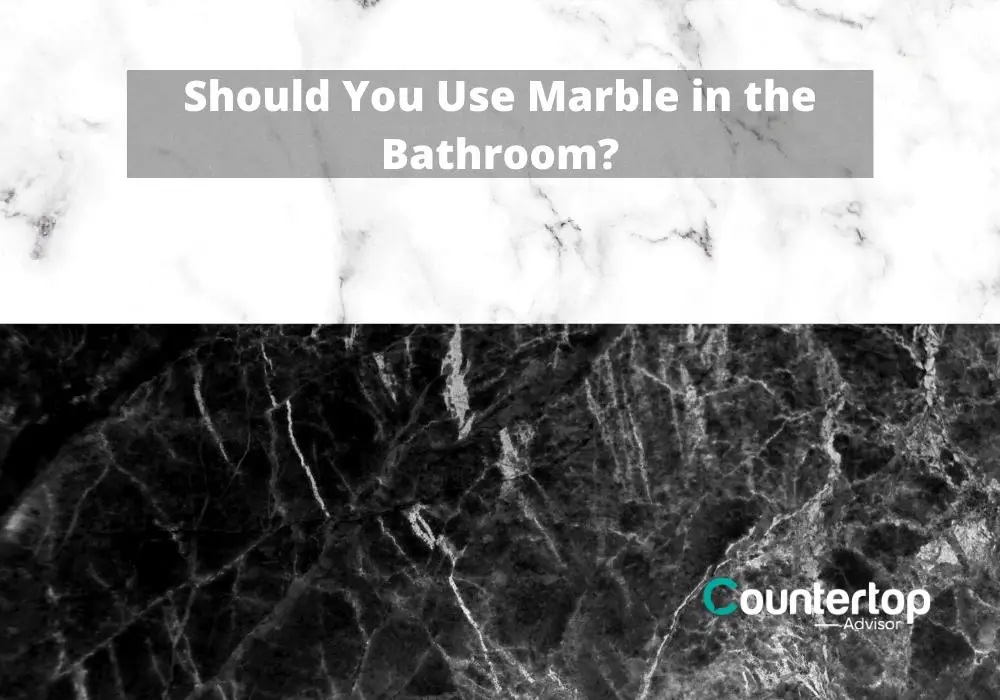
Carrara White — soft gray feathery veining on a light gray background. The most affordable, widely available white marble. Its busy veining hides any etching better than starker whites — the forgiving choice. See my white marble guide.
Calacatta — brighter white with bold gray-and-gold veining. The luxury statement choice. More expensive, more dramatic, and the bolder veining still helps disguise minor etching.
Statuary (Statuario) — bright white with crisp linear gray veining. Sits between Carrara and Calacatta on price and drama.
Nero Marquina — deep black with bold white veining. A dramatic choice that works beautifully in modern bathrooms. Etching is less visible on dark marble than on white.
Danby — Vermont-quarried American marble, slightly harder and less porous than Italian marble, with soft gray or golden veining. The pick for buyers prioritizing domestic sourcing or marginally easier maintenance.
Finish Matters: Honed vs. Polished
A practical tip echoed in Natural Stone Institute care guidance: honed (matte) marble hides etching far better than polished marble in a bathroom. Polished marble shows every dull etch mark against its reflective surface; honed marble’s matte texture camouflages them. If you love marble but worry about etching, honed is the answer. The trade-off: honed marble shows water spots and is slightly more porous, so it needs slightly more diligent sealing. Most experienced installers recommend honed for marble bathroom counters specifically for this reason.
Marble Bathroom Care: The Easy Routine
- Daily: wipe with warm water and a small amount of pH-neutral dish soap. Buff dry with microfiber.
- For deeper cleaning: a marble-safe pH-neutral cleaner. Never use vinegar, lemon, bleach, ammonia, or generic bathroom cleaners.
- Sealing: every 6–12 months with a quality natural-stone sealer. See marble sealing guide.
- Trays for cosmetics: the single most useful habit — keep perfumes, nail polish remover, and beauty products on a tray rather than directly on the marble.
- Wipe spills immediately, especially anything acidic.
Should You Choose Marble for Your Bathroom?
Yes if: you specifically want the iconic marble look, you’ll use a tray for cosmetics, you’re willing to seal periodically, and you accept that minor etching may develop over years as a patina. For a primary bath or a powder room, marble is genuinely lovely.
Probably not if: you’re not a careful caretaker, you have small children using the vanity, or the idea of any visible etch mark would bother you. In those cases, a marble-look quartz (Caesarstone, Cambria, Silestone, Calacatta-style designs) gives you the appearance with zero etching and no sealing. See my quartzite vs marble comparison for natural-stone alternatives.
Frequently Asked Questions
Is marble a good choice for a bathroom vanity?
Yes — marble works far better in a bathroom than in a kitchen because the daily acidic exposure that etches kitchen marble is largely absent. With reasonable sealing and a tray for acidic cosmetics, marble stays gorgeous for decades.
Does marble etch in a bathroom?
It can — nail polish remover, hair dye, and some bathroom cleaners are acidic enough to etch marble. But etching is much easier to prevent in a bathroom than a kitchen: keep cosmetics on a tray, avoid acidic cleaners, and wipe spills immediately.
How often should marble be sealed in a bathroom?
Every 6–12 months with a quality natural-stone sealer. Test with the water-drop method — reseal when water stops beading on the surface.
Honed or polished marble for a bathroom?
Honed (matte) for most bathrooms — it hides etching far better than polished marble. Polished gives a more reflective, dramatic look but every etch is visible against it.
What’s the best alternative to marble for a bathroom?
A marble-look quartz — Caesarstone Calacatta Nuvo, Silestone Eternal, or Cambria Brittanicca give you the appearance with no etching, no sealing, and full water/chemical resistance. See my Silestone vs Caesarstone comparison.
Ready to pick a specific marble? See my 5 best marbles for a bathroom vanity — Carrara, Calacatta, Statuario, Crema Marfil, and Emperador, ranked by price and drama.
After the marble, the sink matters. See my best bathroom sinks guide — with picks for marble, granite, and quartz vanity tops.