A slab backsplash is a single continuous piece of countertop material that runs from the counter surface up the wall, replacing tile entirely. In 2026 the look is one of the strongest trending features in mid-to-upper-tier kitchen remodels, driven by the same large-scale veining trend that’s selling quartz and quartzite countertops. The premium is real: a full ceiling-height slab backsplash adds $2,000 to $8,000 to a kitchen project, against $300 to $1,500 for a comparable tile run. After 10 years installing both for customers, I’ll walk you through when the upgrade earns its money, where it falls short, what each material actually costs, and the four mistakes I’ve watched homeowners make.
What a Slab Backsplash Is (and the Three Variations)
A slab backsplash uses the same material as your countertop — granite, quartz, marble, or porcelain — cut into a continuous piece that mounts to the wall. There are three common heights, and the choice matters for both cost and look.
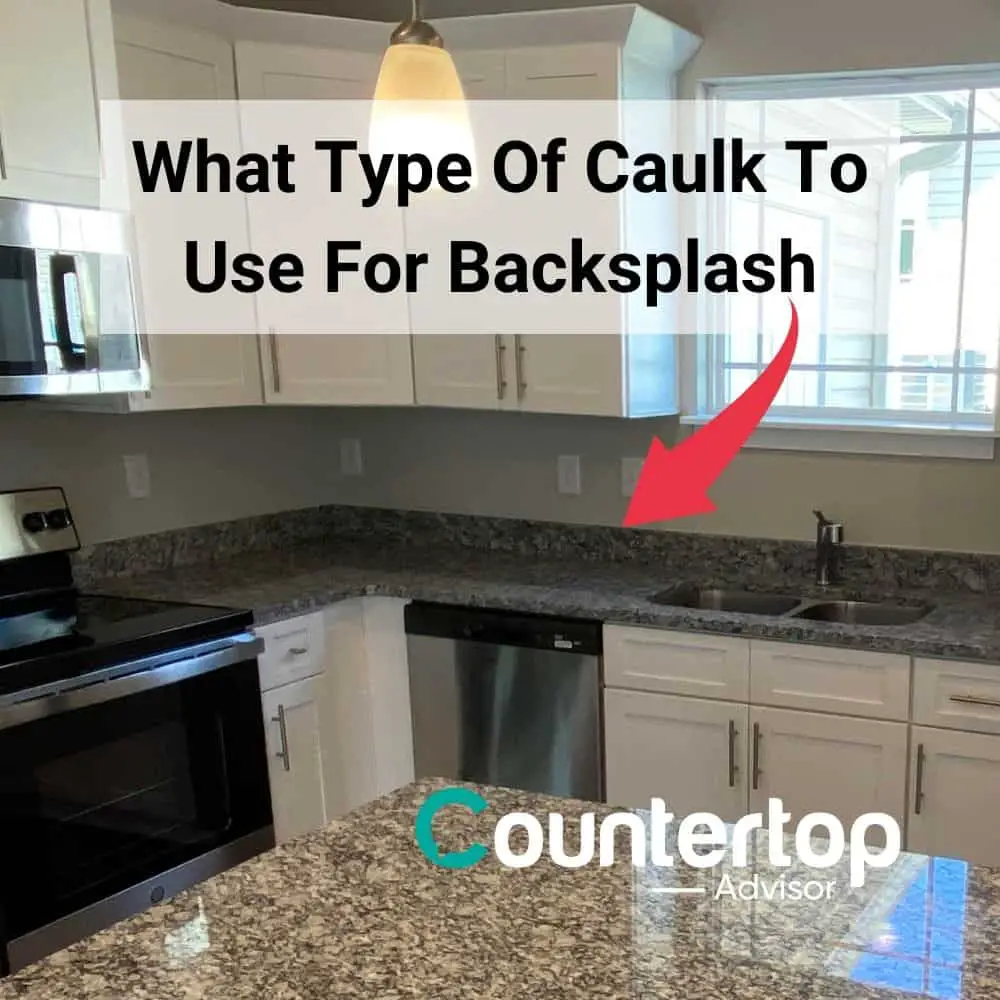
Standard 4-inch slab backsplash is the strip of countertop material that runs along the wall behind the counter, typically 4 inches tall. It’s the default that comes with most countertop quotes. Inexpensive (often included in the base price), nearly invisible, and does the practical job of protecting the wall edge.
Partial-height slab backsplash goes up 18 to 24 inches — the standard distance between counter and upper cabinets. It replaces the field tile in the prep zones but leaves the area above the upper cabinets alone. This is the most common upgrade and what most “slab backsplash” articles actually picture.
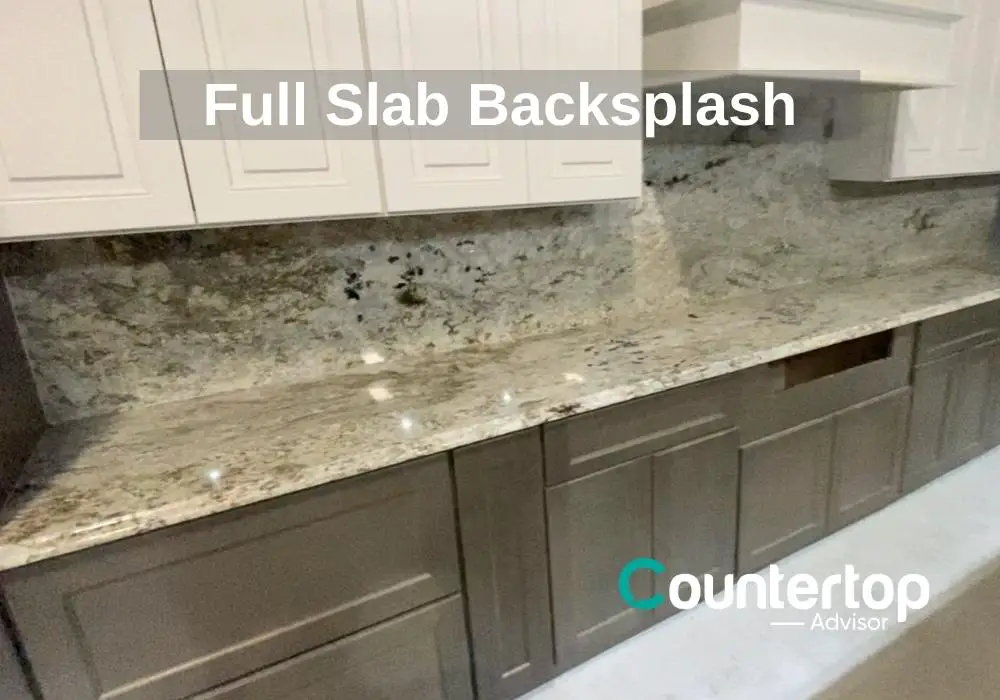
Full-height slab backsplash runs floor counter to ceiling, including the wall behind the range or above the cooktop where there’s no upper cabinet. This is the dramatic, magazine-spread version — and it’s the most expensive because of the extra square footage and the more complex cuts around outlets, range hoods, and windows.
Why Homeowners Are Choosing Slab Over Tile
No Grout Lines, No Grout Maintenance
This is the practical reason most of my customers cited. Grout absorbs grease, discolors over time, and requires sealing to stay water-resistant. A slab backsplash has none of that — one continuous surface, wiped down with the same cleaner you use on the counter. Over a ten-year hold, the maintenance savings are real, even if hard to put a dollar number on.
Seamless Veining and Bookmatched Drama
The visual reason slab is trending: when you use the same stone for counter and backsplash, the veining flows continuously up the wall. With bookmatched slabs (two slabs cut from the same block and mirrored), the effect is striking — particularly on a marble or marble-look quartz like Brittanicca or Calacatta. Tile cannot reproduce this regardless of pattern.
Easier Daily Cleaning
Splatter, grease, water spots, dried-on residue: all wipe off a single-piece quartz or granite backsplash in seconds. No grout brushing, no mildew in seams, no replacing yellowed grout every five years. This matters most behind the range and around the prep sink, where tile grout shows wear the fastest.
Resale Signal in Higher-End Markets
In homes priced above the local median, a full-height slab backsplash signals premium finish to buyers in a way tile usually doesn’t. It does not have the same effect in entry-level markets, where buyers may not register the difference and the cost rarely returns.
The Real Drawbacks
Cost is Five to Ten Times Tile
The honest number: standard ceramic tile installed lands around $10 to $15 per square foot. A slab backsplash in quartz or marble averages $80 to $100 per square foot installed, and exotic stones cross $200. For a typical 12 to 20 square feet of backsplash, that’s the difference between roughly $200 and $1,800-$3,000. The labor advantage favors slab (one install day versus two to four for tile), but the material cost differential overwhelms that for most projects.
Installation Is Less Forgiving
Tile is incremental — a bad cut means one ruined tile and a $3 replacement. A bad cut on a slab backsplash can ruin a $400 piece of stone. Outlets, switches, range hoods, and window returns all need to be templated precisely before fabrication. I’ve seen jobs where a customer added an outlet after templating and the slab had to be cut on-site by a fabricator with a wet saw, which is a job for a specialist, not a general handyman.
Harder to Change Later
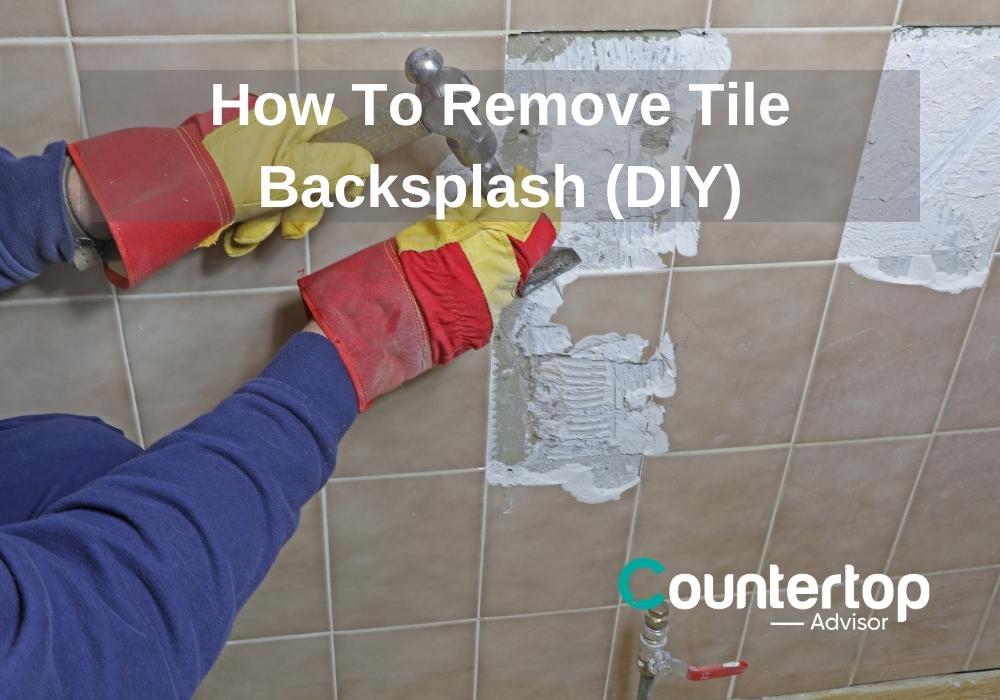
Tile can be ripped out and replaced in a weekend. A slab backsplash is glued to the wall with construction adhesive and silicone — removing it without damaging the drywall behind is nearly impossible. If you might want a different look in five years, tile is the more flexible choice.
Slab Backsplash Cost in 2026
Installed cost by material, per square foot, in 2026:
| Material | Installed $/sq ft | Typical Full-Height Add-On |
|---|---|---|
| Quartz (Cambria, Caesarstone, Silestone) | $80–$130 | $1,500–$3,500 |
| Granite | $50–$100 | $1,000–$2,500 |
| Marble | $90–$200+ | $2,000–$5,000 |
| Quartzite | $70–$150 | $1,400–$3,500 |
| Porcelain slab (Dekton, Neolith) | $90–$175 | $1,800–$4,200 |
| Standard ceramic tile (for comparison) | $10–$25 | $300–$1,500 |
The cost driver is square footage plus complexity. A simple rectangular run with two outlets and no window is the base price. Add a range hood cutout, a window cut, a corner with mismatched angles, or a bookmatched-slab requirement and you can push 20-40% over the base. Angi’s 2026 backsplash cost guide tracks the same ranges across their national service-provider network.
Best Materials for a Slab Backsplash
Quartz is my most-recommended material for slab backsplashes. It’s non-porous (no sealing required behind a range), heat-resistant enough for backsplash applications, and the engineered consistency means the slab actually matches the countertop without color-shift surprises. Bookmatched quartz on a feature wall behind a range is one of the strongest visual moves in modern kitchen design.
Granite is the budget-friendly natural-stone option and pairs naturally with a granite countertop. If you’re already installing granite counters, extending the same slab up the wall costs less per square foot than starting with a different material. The downside: granite needs to be sealed periodically, even on a vertical surface, because grease splatters absorb. My granite sealing guide covers the right products for this use.
Marble is the most beautiful and the most maintenance-intensive. Even sealed, marble etches from acidic spills — tomato sauce, lemon juice, red wine — and behind a range, those splatters are inevitable. For a marble backsplash to look good at year ten, you need to accept the etch patina as part of the aesthetic or commit to immediate spill cleanup. Honed (matte) marble hides etch marks better than polished marble.
Porcelain large-format slabs (Dekton, Neolith, Laminam) are the newest option and the best for behind a gas range because of true heat resistance and zero porosity. They cost similar to mid-tier quartz but require specialized fabrication — not every shop will quote them.
Slab vs. Tile: A Decision Framework
Use slab when: you want a high-end magazine look, you’re remodeling for a long hold, the countertop you’re choosing has dramatic veining you want to extend, and you’re already in a $40,000+ kitchen budget where the backsplash is a small percentage of total cost.
Use tile when: budget is the dominant constraint, you want design flexibility (zellige, subway, herringbone, mosaic accents), you might want to change the look in five to ten years, the countertop is calm enough that the backsplash needs to be the visual statement, or you have a unique layout (lots of corners, windows, soffits) where slab waste runs high.
Use both when: you want the seamless prep-zone clean of slab with a tile accent above the range or in a feature niche. This hybrid approach is more common than people realize and gets the best of both. Tell your fabricator to leave out a section for tile and you can build the wall flush for an inset design.
Four Mistakes I’ve Watched Customers Make
1. Not seeing the actual slab before fabrication on a veined material. The 4-inch sample shows you the color, not the movement. On a marble-look quartz like Brittanicca or a heavily-veined natural marble, the actual slab can have dramatic patterning that won’t appear on a sample. Always visit the slab yard and tag your specific slab for both counter and backsplash — the same rule applies as for granite countertops, which I cover here.
2. Forgetting the outlet templating before slab fabrication. Every outlet, switch, range-hood vent, and under-cabinet light needs to be measured to the millimeter before fabrication starts. Adding an outlet after templating means cutting the slab on-site with a wet saw, which not all installers can do cleanly. Walk the kitchen with the electrician before signing the fab order.
3. Picking marble for a heavy-cooking household. The look is gorgeous in the showroom and stunning at install. At year three behind a gas range with daily acidic cooking, the etch pattern is visible from across the room. If you cook often with tomato, citrus, or vinegar, choose quartz instead and skip the maintenance burden.
4. Stopping the slab at the wrong height. The most awkward look in a slab backsplash is when it stops 4 inches short of the bottom of the upper cabinets, leaving a strip of painted drywall. Either go full-height under the cabinets (cleanest visual) or stop at a deliberate height like 18 or 24 inches (which means upper cabinets need to be hung at the matching reveal). The “almost full-height” gap is the dead giveaway of a poorly-planned install.
Frequently Asked Questions
How much does a full slab backsplash cost in 2026?
Installed cost for a full ceiling-height slab backsplash runs $2,000 to $8,000 for a typical kitchen in 2026, depending on material and complexity. Quartz averages $80–$130 per square foot installed; granite $50–$100; marble $90–$200+. A standard 18-inch slab backsplash for the same kitchen lands $1,200–$5,000.
Can you use the same slab for countertop and backsplash?
Yes — it’s the most common slab backsplash approach. Using the same material gives the seamless veining-flow effect that drives the trend. The cost is simply additional square footage of the countertop material at the fabricator’s per-square-foot rate, plus install labor. Granite or quartz are the most common choices for matched counter-and-backsplash installations.
Is a slab backsplash worth the money?
For long-hold homes in mid-to-upper price tiers, yes — the maintenance savings, resale signal, and visual impact compound over a 10+ year hold. For short-hold properties, flips, and entry-level homes, the cost rarely returns and tile is the smarter choice. The break-even is usually around the 7-year mark.
Do slab backsplashes need to be sealed?
Quartz and porcelain slab backsplashes never need sealing — they’re engineered non-porous materials. Granite and marble backsplashes do need periodic sealing, even on a vertical surface, because grease splatters from a range will absorb over time. My granite sealing walkthrough covers the right products and frequency for vertical applications.