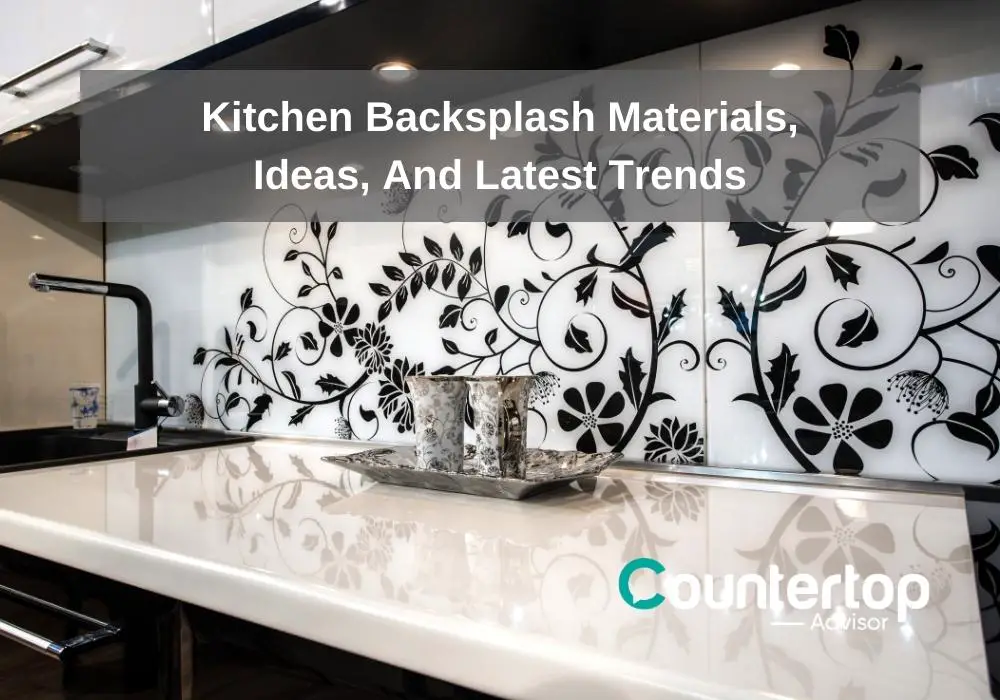
A kitchen backsplash does two jobs: it protects the wall from water, grease, and food splatter, and it sets the design tone of the whole room. For 2026, the strongest trends are textured and vertical-stacked subway tile, zellige, full-stone slab backsplashes, and warm earthy colors — especially sage green — replacing the cool grays and stark whites that dominated the 2010s. After 10 years installing countertops and the backsplashes that meet them, I’ll walk you through every backsplash material with honest pros and cons, then the design trends actually worth following in 2026.
Kitchen Backsplash Materials Compared
Ceramic and Porcelain Tile
The most popular backsplash material, and for good reason: enormous variety, easy maintenance, and the widest price range of any option (roughly $10–$25 per square foot installed for standard tile). Porcelain is denser and more water-resistant than ceramic, which matters most behind a range. Both are durable, both clean easily, and both come in formats from classic subway to handmade-look zellige. The grout lines are the only real maintenance concern — they need periodic sealing and can discolor over years.
Marble Tile
Marble backsplash tile brings genuine luxury and natural veining no manufactured tile fully replicates. The trade-off is maintenance: marble is porous and etches from acidic splatter even when sealed. Honed (matte) marble hides etching better than polished. Beautiful, but a commitment — best for homeowners who either stay on top of spills or embrace the patina.
Glass Tile
Glass tile is non-porous, stain-proof, and reflective — it bounces light around and makes small kitchens feel larger. It’s grout-friendly in wet zones and comes in mosaic sheets that install relatively easily. The downside is that it shows every smudge and can read dated if you pick a trendy color. Best as a feature behind the range or as an accent rather than a whole-kitchen treatment.
Natural Stone Slab (Granite, Quartzite, Marble)
Extending your countertop material up the wall as a continuous slab is the premium move — seamless, grout-free, and dramatic when the stone has veining. It’s the most expensive backsplash option ($1,500–$5,000+ for a full-height install) but eliminates grout maintenance entirely. See my full slab backsplash guide for the cost breakdown by material.
Travertine and Natural Stone Tile
Travertine brings warm, earthy texture and pairs beautifully with the warm-neutral palettes trending in 2026. Like all natural stone it’s porous and needs sealing. Its tonal warmth is exactly on-trend right now after a decade of cool grays.
Metal (Stainless Steel, Copper, Tin)
Metal backsplashes — stainless steel, copper, pressed tin — are the easiest to clean of any option (one wipe, no grout) and bring an industrial or characterful look depending on the metal. Stainless reads modern; copper develops a living patina; tin reads vintage. Best for serious cooks who prioritize wipe-clean practicality.
The Kitchen Backsplash Trends Worth Following in 2026
Textured and Vertical-Stacked Subway Tile
Subway tile is still the most popular backsplash — but the 2026 version is updated. Vertical stacking (running the tile vertically instead of the classic horizontal offset) reads modern and makes ceilings feel higher. Textured and beveled subway tile catches light and adds dimension that flat tile can’t. Handmade-look subway tile in warm off-white and cream tones is replacing stark bright white.
Zellige Tile
Zellige — handmade Moroccan clay tile with irregular edges and a glazed, slightly uneven surface — is one of the defining looks of 2026. Each tile is slightly different, so the finished wall has depth and movement no machine tile matches. It works in warm neutrals and, increasingly, in the sage green that’s everywhere this year.
Sage Green and Warm Earth Tones
The biggest color shift, echoed across 2026 design coverage from Homes & Gardens and other design publications: out with cool gray and stark white, in with sage green, warm neutrals, terracotta, and earthy tones. Sage green is the standout, showing up in zellige, ceramic subway, and glass formats. Warm reds, plum, and spice tones are appearing as bolder choices. If your kitchen still reads cool-gray, a warm-toned backsplash is the single fastest update.
Full-Height and Slab Backsplashes
Running the backsplash all the way to the ceiling — or using a continuous stone slab — is firmly mainstream now. It draws the eye up, makes the kitchen feel taller, and (with slab) eliminates grout lines entirely. The behind-the-range feature wall, full height, is one of the strongest looks of the year.
Texture and Mixed Materials
Texture is a key 2026 design feature — fluted tile, handmade ceramics, dimensional surfaces — especially valuable in neutral palettes where color isn’t doing the work. Mixed-material backsplashes that combine, say, a stone slab behind the range with tile elsewhere, or wood shelving against a tile field, add layered interest.
Storage Niches
The recessed backsplash niche — a built-in shelf behind the range for oils and spices, or a ledge for display — continues to be popular. It’s a functional upgrade that needs to be planned before tiling, not after.
How to Choose: Match the Backsplash to the Countertop
The single most useful rule from my install experience: if the countertop is busy, keep the backsplash calm; if the countertop is calm, the backsplash can be the statement. A heavily-veined granite or quartz next to a bold patterned tile creates visual chaos. A quiet solid-color counter gives you room to do something dramatic on the wall. Decide which surface is your statement piece, then let the other one support it. And always hold backsplash samples against your actual countertop in the kitchen’s real lighting before committing — colors shift between daylight and warm bulbs.
Frequently Asked Questions
What is the most popular kitchen backsplash in 2026?
Subway tile remains the most popular, but in updated forms — vertical-stacked layouts, textured and beveled surfaces, and warm off-white and cream tones rather than stark white. Zellige tile and full slab backsplashes are the fastest-rising trends.
What backsplash colors are trending for 2026?
Warm earth tones are replacing cool grays and stark whites. Sage green is the standout color of 2026, appearing in zellige, ceramic subway, and glass tile. Warm neutrals, terracotta, and bolder spice tones (warm red, plum) are also trending.
What is the cheapest kitchen backsplash material?
Standard ceramic tile is the most budget-friendly at roughly $10–$25 per square foot installed. Natural stone slab is the most expensive. Glass and marble tile sit in the middle. See my slab backsplash cost guide for the full material-by-material comparison.
Should the backsplash match the countertop?
It should coordinate, not necessarily match. The key rule: if the countertop is busy and veined, choose a calm backsplash; if the countertop is a quiet solid, the backsplash can be the statement. One surface leads, the other supports.
How high should a kitchen backsplash be?
The standard is 18 inches — from the countertop to the underside of the upper cabinets, consistent with National Kitchen & Bath Association planning guidelines. Full-height backsplashes that run to the ceiling (especially behind the range) are a strong 2026 trend. The one height to avoid is stopping a few inches short of the cabinets, which leaves an awkward strip of bare wall.
For more, see my guides on slab backsplashes, backsplash ideas for white cabinets, and backsplash for Blue Pearl granite.