Dekton is the easiest countertop material to clean — it’s non-porous, never needs sealing, and routine daily maintenance takes about 60 seconds with warm water and pH-neutral dish soap. Cosentino, the manufacturer, specifically recommends their Q-Action cleaner for daily use, but a generic neutral cleaner works equally well. After 10 years installing countertops and personally using a Dekton “Soke” surface as my own desk, I’ll walk you through Cosentino’s official care protocol, the products to use and avoid, how to handle stubborn stains, and the maintenance mistakes that can dull the finish over time.
Why Dekton Is So Low-Maintenance
Dekton is an ultra-compact surface manufactured by Cosentino using their proprietary Sinterized Particle Technology — essentially pressure-fusing porcelain, glass, and quartz raw materials into a virtually non-porous slab. The result: a countertop that scratches, stains, and heat-bothers other materials simply don’t penetrate. Unlike granite or marble, Dekton needs no sealing — ever. Unlike quartz, it shrugs off hot pans directly from the oven without softening. The trade-off is cost (Dekton runs roughly $90-$200 per square foot installed) and the limited fabricator network qualified to cut it.
For day-to-day care this means: less work than any other premium countertop, but with one critical rule — avoid harsh chemicals that will eventually dull the polished finish even though they can’t damage the substrate.
Daily Cleaning: The 4-Step Routine
Step 1: Clear the Surface
Remove appliances, dishes, cutting boards, and decor. You need an unobstructed surface to wipe consistently — missed spots become buildup zones.
Step 2: Apply Warm Water + pH-Neutral Soap
Per Cosentino’s official Dekton maintenance guidance, the daily standard is mild dish soap (plain Dawn works) mixed with warm water. Apply with a soft microfiber cloth or sponge. Cosentino’s own Q-Action cleaner is the manufacturer-recommended alternative if you want a product designed specifically for ultra-compact surfaces — it includes self-drying agents and natural soap.
Step 3: Rinse with Clean Water
Wipe again with a fresh microfiber cloth and clean warm water to remove any soap residue. Skipping this step lets soap film build up over weeks and produces a hazy look on dark Dekton colors.
Step 4: Dry with a Clean Microfiber Cloth
Buff dry with a clean microfiber cloth to prevent water spots, especially on polished or dark Dekton finishes. A multi-pack of microfiber cloths dedicated to countertop use (kept separate from kitchen cleanup rags that may have grease residue) keeps daily care quick.
That’s it for daily care. About 60 seconds per surface. No sealing, no specialty stone treatment.
Handling Stubborn Stains and Spills
Dekton resists most common kitchen spills — coffee, wine, oil, tomato, citrus — but stubborn buildup happens, especially around cooktops and prep zones. For stuck-on grease or dried-on food residue:
- Spray a pH-neutral stone-safe cleaner directly on the spot.
- Let it dwell for 2-3 minutes to dissolve the residue.
- Wipe with a damp microfiber cloth. For very stubborn spots, use a non-abrasive sponge — never steel wool or scouring pads.
- Rinse with clean water and dry.
For limescale buildup around faucets and sink edges (common with hard water), Cosentino approves CLR or similar anti-limescale products applied briefly and rinsed thoroughly. Don’t let acidic cleaners sit on the surface for extended periods — while they won’t damage Dekton’s substrate, they can dull a polished finish over many years of frequent use.
Disinfecting Dekton Surfaces
For occasional disinfection after handling raw meat, poultry, or sick-household cleanup, dilute isopropyl alcohol or denatured alcohol 1:1 with water in a spray bottle. Spray, let dwell 30 seconds, wipe with a microfiber, then rinse with plain water. This protocol is safe for Dekton’s surface and effective against bacteria and most viruses.
Avoid using disinfecting wipes containing quaternary ammonium compounds (Lysol-style wipes) as daily disinfectants — they leave a residue film that builds up over time. They’re fine for occasional use; just rinse with water afterward.
What NOT to Use on Dekton
Per Cosentino’s care documentation and my own experience seeing customers dull their finishes, avoid:
- Bleach as a daily cleaner. Occasional spot use is fine; daily use will eventually dull the surface.
- Ammonia-based cleaners (Windex with ammonia). Will dull dark Dekton finishes over time.
- Abrasive scrubbers — steel wool, scouring pads, scratch-pad sponges. Even though Dekton is highly scratch-resistant, repeated abrasive scrubbing leaves micro-scratches on the polished layer.
- Furniture polish, oils, waxes. Dekton is non-porous; these products sit on the surface and create streaky buildup.
- Hydrofluoric acid or strong solvents. Rare, but worth naming — these will permanently etch Dekton.
For comparison with other countertop materials’ care needs, see my granite cleaning guide, quartz cleaning guide, and the chemistry-heavy sealing post (Dekton, like quartz, never needs sealing).
Long-Term Care: Polishing and Refresh
Dekton’s surface doesn’t degrade with normal use, but the finish can lose some sheen on heavily-used prep zones after 5-10 years. To refresh:
Cosentino’s CleanColorsil product (silicone and resin cleaner) restores shine on dulled polished Dekton. Apply with a microfiber, buff in circular motions, and wipe off the residue. For a more dramatic refresh, your fabricator can polish the surface with diamond pads — usually a 1-2 hour job on a typical kitchen.
I’ve had a Dekton Soke desk for several years. The only maintenance it gets is the 4-step daily routine above. The finish today looks identical to install day. That consistency — visually unchanged over years — is the real argument for Dekton’s price premium.
Dekton Care Quick-Reference Table
| Frequency | Task | Products |
|---|---|---|
| Daily | 4-step wipe routine | Warm water + pH-neutral dish soap, microfiber |
| Weekly | Disinfect prep zones | 50/50 alcohol-water spray |
| As needed | Stubborn stain removal | pH-neutral stone cleaner + 2-min dwell |
| Annually | Limescale removal | CLR (brief contact + rinse) |
| Every 5-10 yrs | Shine refresh (optional) | CleanColorsil or fabricator polish |
| Never | Sealing | Dekton is non-porous — never needs sealing |
Frequently Asked Questions
Do Dekton countertops need to be sealed?
No — Dekton is virtually non-porous and never requires sealing, unlike granite, marble, or dolomite. This is one of the material’s main advantages over natural stone. The surface protection is built into the manufacturing process.
Can I use Lysol or Clorox wipes on Dekton?
For occasional disinfection, yes — but rinse with water afterward to remove the residue film. Don’t use them as a daily cleaner; the build-up will eventually dull the finish. For routine cleaning, stick to warm water and pH-neutral dish soap.
What’s the best daily cleaner for Dekton?
Warm water with a few drops of pH-neutral dish soap (plain Dawn works), per Cosentino’s official maintenance guidance. Cosentino’s Q-Action is the manufacturer’s branded daily cleaner if you prefer a product specifically formulated for ultra-compact surfaces.
Can you use vinegar on Dekton countertops?
Diluted vinegar (mixed with water) is safe for occasional use on Dekton — unlike on marble or dolomite, where vinegar etches. Cosentino approves vinegar for occasional limescale removal. Don’t use straight, undiluted vinegar as a daily cleaner; repeated use can dull polished finishes over many years.
How do you remove scratches from Dekton?
Dekton is highly scratch-resistant, so visible scratches are unusual. If you do see one, contact your fabricator — light scratches can sometimes be polished out with diamond pads, but deeper damage usually requires localized repair by a certified Dekton technician.
Dekton is one porcelain/ultra-compact brand. For the broader material overview see are porcelain countertops durable and heat resistant.
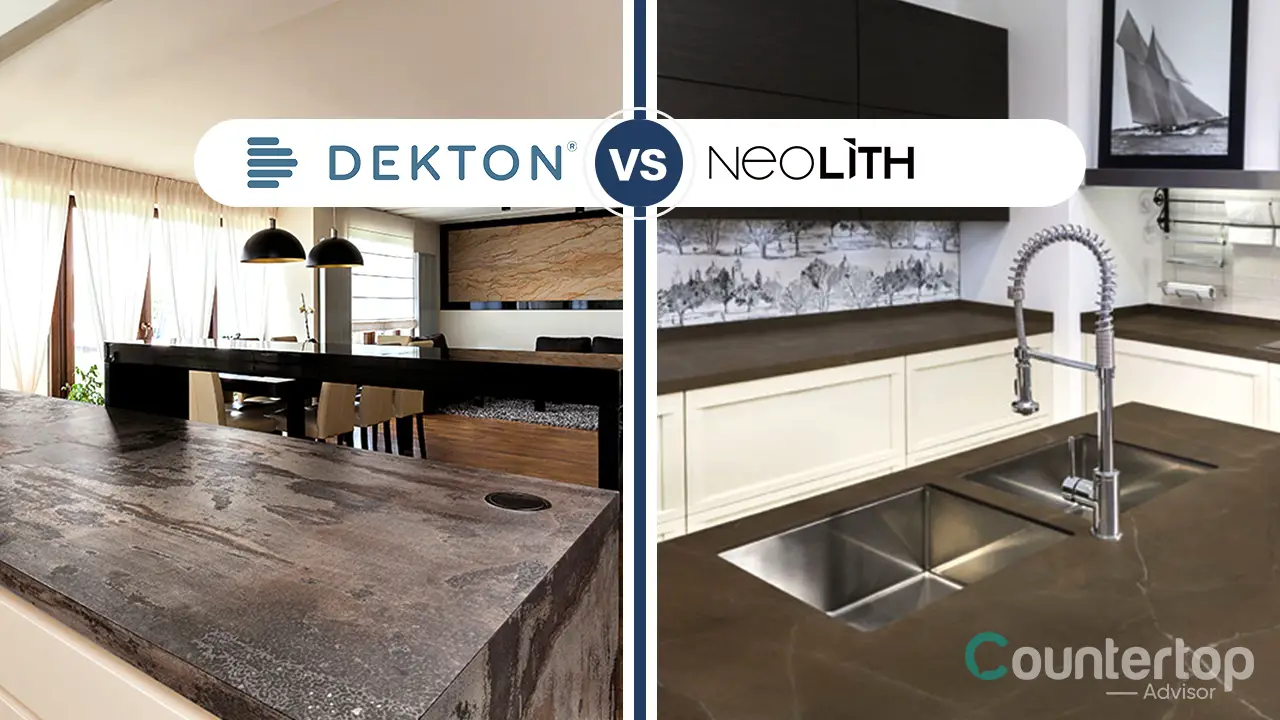
Comparing Dekton to its main competitor? See Dekton vs Neolith for the side-by-side on price and performance.