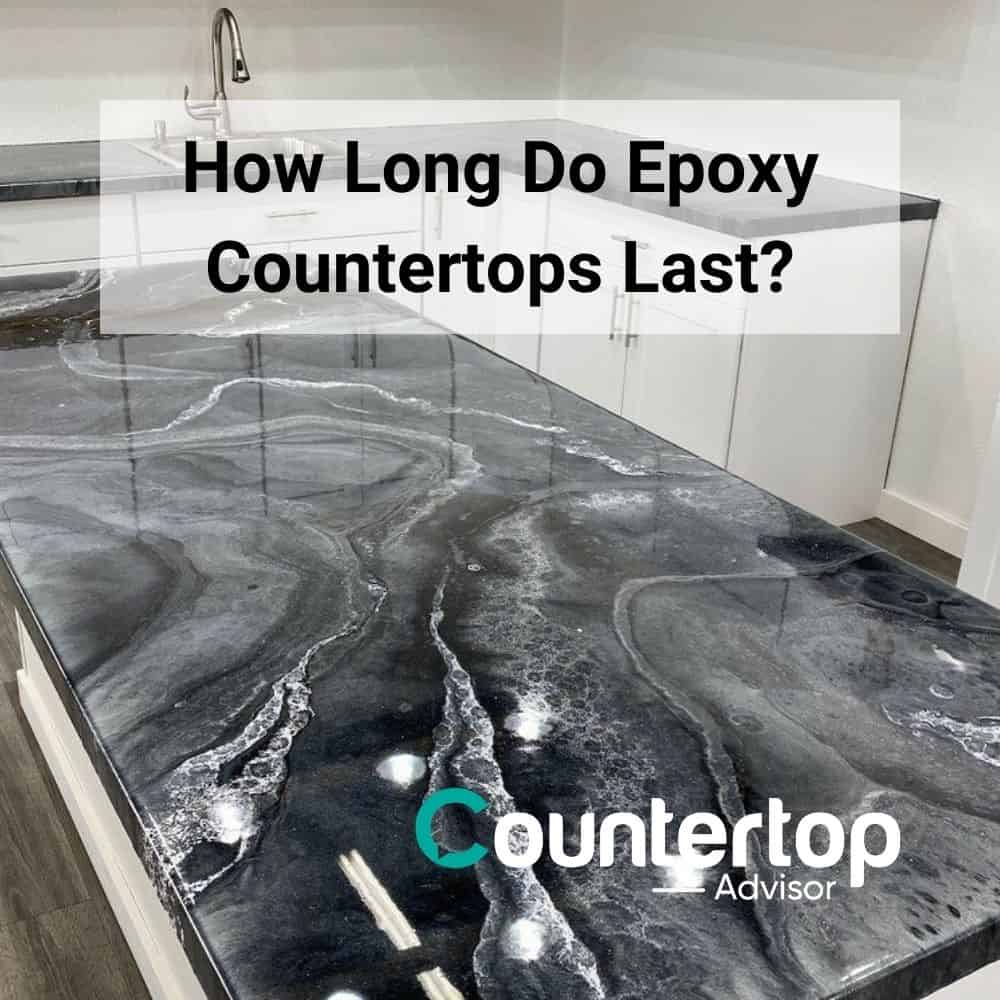
Epoxy countertops last 10 or more years when properly applied and cared for — with a realistic overall range of 5 to 20 years. A professionally installed epoxy countertop with quality resin can reach the upper end, 10 to 20 years; a DIY job in a home kitchen typically lands at 5 to 10 years before it may need refinishing. After 10 years working with countertops, here’s what actually determines whether your epoxy countertop lasts five years or twenty — and the one factor (sunlight) that quietly shortens many of them.
The Honest Lifespan Range
- 5–10 years — typical for a DIY epoxy countertop in a home kitchen, after which it may need refinishing or touch-ups.
- 10–20 years — achievable with professional installation, high-grade resin, and good care.
- 20+ years — possible at the very top end, with premium UV-resistant resin, expert application, and a low-stress environment.
Epoxy resin was originally developed for laboratory surfaces — it’s inherently sanitary, scratch-resistant, and durable. The wide lifespan range exists because, more than almost any other countertop, epoxy’s longevity depends on how it was applied and how it’s treated.
What Determines How Long Epoxy Lasts
1. Application Quality
This is the biggest factor. Epoxy that’s mixed at the correct ratio, poured at the right temperature, properly de-bubbled, and fully cured will last for decades. Epoxy with mixing errors, trapped bubbles, or an incomplete cure can develop problems within a year or two. A professional — or a careful, experienced DIYer — gets the long lifespan; a rushed first attempt does not. See my step-by-step epoxy guide for doing it right.
2. Resin Grade
High-grade epoxy resins last longer and resist yellowing far better than budget products. The resin is not the place to economize — a quality food-safe, UV-resistant formula is the difference between a counter that looks good at year 15 and one that ambers at year 5.
3. Sunlight (the Quiet Lifespan Killer)
This is the factor most homeowners overlook. UV radiation in direct sunlight causes photodegradation — the resin’s molecular structure breaks down, and the surface yellows or ambers over time. An epoxy countertop next to a big sunny window will yellow years before an identical counter in a shaded kitchen. Mitigations: use a UV-resistant epoxy from the start, keep epoxy surfaces out of consistent direct sun where possible, and on sun-exposed counters consider a UV-protective topcoat refreshed periodically.
4. Heat Exposure
Epoxy resists moderate heat but is not heatproof — sustained or extreme heat scorches and degrades it. Always use trivets. Repeated hot-pan contact shortens lifespan and causes the gritty/discolored damage covered in my post on hot pans on epoxy countertops.
5. Daily Care
Regular cleaning with gentle products and avoiding harsh chemicals and abrasive scrubbers extends epoxy’s life. Cutting directly on it (use a board) and dragging heavy abrasive objects across it cause the scratches that accumulate over years.
Can Epoxy Countertops Be Repaired?
Yes — and this extends their effective lifespan significantly. Light scratches can often be buffed out. Dull or worn areas can be sanded and re-coated with a fresh layer of epoxy, essentially renewing the surface. Yellowed epoxy can be sanded and topped with fresh UV-resistant resin. Because epoxy can be re-coated, a countertop that “needs refinishing” at year 8 isn’t done — a refresh coat can buy many more years. This repairability is a real advantage over materials like laminate, where damage usually means replacement.
How Epoxy Lifespan Compares
Epoxy’s 10+ year typical lifespan beats laminate (10–20) at the low end and butcher block (10–15), but falls short of granite, quartz, and quartzite, which last 20–50+ years. The repairability narrows the gap — epoxy can be renewed rather than replaced. For the full comparison see my how long granite countertops last guide.
Frequently Asked Questions
How long do epoxy countertops last?
10 or more years with proper application and care, with a realistic range of 5 to 20 years — consistent with national contractor data. DIY home kitchens typically see 5–10 years before refinishing; professionally installed epoxy with quality resin reaches 10–20 years.
Do epoxy countertops turn yellow over time?
They can — UV light from direct sunlight causes photodegradation that yellows or ambers the resin. UV-resistant epoxy resists this much longer. Keeping epoxy out of consistent direct sun and using a quality UV-stable resin are the keys to preventing yellowing.
Can epoxy countertops be repaired or refreshed?
Yes. Light scratches buff out, and dull, worn, or yellowed surfaces can be sanded and re-coated with fresh epoxy — essentially renewing the countertop. This repairability significantly extends an epoxy countertop’s effective lifespan.
What shortens an epoxy countertop’s lifespan the most?
Poor application (mixing errors, bubbles, incomplete cure) is the biggest factor, followed by UV exposure from direct sunlight, sustained heat without trivets, and harsh chemical or abrasive cleaning. Get the application right and protect from sun and heat, and epoxy lasts at the top of its range.
Do epoxy countertops last as long as granite?
No — granite lasts 25–50+ years versus epoxy’s typical 10+. But epoxy can be sanded and re-coated to renew the surface, which extends its practical life, and it costs far less if installed DIY. See my epoxy countertop cost guide.