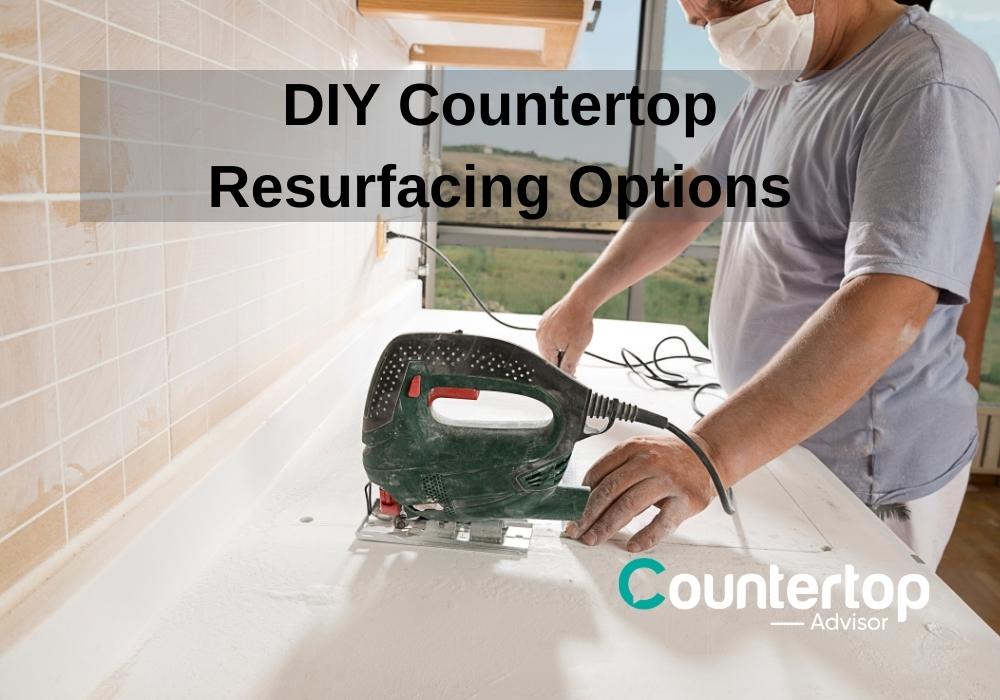
DIY countertop resurfacing kits cost $60 to $300 in materials and can transform a tired laminate or worn countertop in a weekend — a fraction of the $2,500 to $6,000 you’d spend on real stone replacement. After 10 years in the countertop business watching customers wrestle with this decision, I’ll give you the honest comparison of the five DIY options that actually work, what each one costs, how long each lasts (the most-skipped question), and the situations where I’d tell you to skip the kit and save for real stone instead.
When DIY Resurfacing Actually Makes Sense
Before product comparisons, the honest gut-check. DIY resurfacing earns its money in three specific situations:
Rental properties. You need the kitchen to show well, you can’t justify $4,000 in real countertop, and tenant wear is going to chew through anything you install. A $150 refinishing kit that lasts 3 to 5 years is the right math.
Short-hold homes (2 years or less to sale). Buyers respond to “updated kitchen” more than to “specific premium countertop material.” If you’re selling in under 24 months, the resurfacing kit returns its cost in faster sale and slightly higher offer; the granite upgrade often doesn’t.
Tight-budget remodels where countertops are the last priority. You replaced flooring, repainted cabinets, swapped appliances, and the budget is gone. Resurfacing buys you 3 to 7 years of acceptable-looking counters while you save for real replacement.
Where DIY resurfacing does NOT make sense: a long-term-hold home (5+ years), heavy-cooking households, kitchens where the counters are the visual centerpiece, or any situation where you’d be looking at the result every day for a decade. In those cases, the kit will start showing wear in year 2-3 and you’ll regret not waiting for real stone. My granite pros and cons guide covers that long-term math.
The 5 DIY Countertop Resurfacing Options That Work
1. Daich SpreadStone Mineral Select Refinishing Kit
The best entry-level option and the one I recommend most often to customers who can’t be talked out of going DIY. SpreadStone Mineral Select (full product specs on the Daich official site) uses real ground stone suspended in a polymer resin, so the finished surface has actual texture and depth rather than the painted-on look of cheaper kits. It’s epoxy-free, low-VOC, and forgiving for first-time DIYers.
Realistic durability: 5-7 years in typical home use; 3-4 years in heavy-use kitchens. The mineral surface resists heat (up to about 200°F), mild abrasion, and most household chemicals. It does NOT love standing water, so the area immediately around the sink needs caulking attention.
Coverage: One kit covers 30-40 square feet (a standard kitchen). Ten color options including Sundance, Ironstone, Volcanic Black, and Natural White.
Total cost (kit + supplies): $180-$220. About a weekend of work.
2. Rust-Oleum Countertop Transformations
The Home Depot favorite and probably the most-installed DIY countertop kit in America. Rust-Oleum Countertop Transformations uses a base coat followed by decorative chips and a clear protective topcoat. The finished look mimics natural stone texture from a distance — up close, you can tell it’s a coating, not stone.
Realistic durability: 3-5 years in typical use. The clear topcoat is the wear point; it tends to dull and develop wear patterns in the heaviest-use zones (prep area, sink edge) before the rest of the counter shows age. Some customers add a fresh topcoat at year 3 to extend the life.
Coverage: Small kit (50 sq ft) or Large kit (100 sq ft). Six color options.
Total cost: $150-$220 for the kit. Slightly more demanding than SpreadStone because of the chip-application step — budget two weekends, including dry time.
3. Giani Countertop Paint Kit
The most beginner-friendly of the bunch. Giani Countertop Paint is a paint-and-glaze system — you brush on a primer, then sponge-apply three minerals to create the granite-look pattern, then finish with two coats of clear topcoat. The result looks more like painted faux-granite up close than the texture-based kits above, but it’s the easiest application of the five options.
Realistic durability: 2-4 years before the topcoat dulls in high-use areas. The paint base shows wear faster than mineral or epoxy systems. Best for rental properties, low-stakes refreshes, or homeowners who plan to update again in a few years.
Coverage: 35 square feet per kit. Color options including White Diamond, Bombay Black, Sicilian Sand, Chocolate Brown.
Total cost: $75-$95 for the kit. The cheapest entry point.
4. CX Concrete Refinishing Kit (Cement Overlay)
For homeowners who want a genuine concrete-counter look without pouring new concrete. CX Concrete Refinishing Kit trowels a cement-based skim coat over your existing countertop, which you then color, smooth, and seal. The finished surface is actual cement, not a paint or epoxy mimic, and it ages with the patina concrete is known for.
Realistic durability: 7-10+ years if properly sealed. Concrete patinas over time — that’s a feature or a bug depending on whether you like the look. Acidic spills will etch unsealed concrete the same way they etch marble.
Coverage: Variable depending on thickness. Most kits cover 30-50 square feet at a 1/4-inch application.
Total cost: $200-$280 for materials. The most labor-intensive of the five — budget a full weekend plus weekday curing.
5. Stone Coat Countertops Epoxy Kit (or TotalBoat Table Top Epoxy)
The most durable DIY option and the one that produces results that genuinely fool people into thinking it’s real stone. Stone Coat epoxy and TotalBoat Table Top Epoxy both produce a thick, glass-clear pour that you tint with metallic powders to create marble-like veining. The result is striking and the most “high-end” DIY look available.
Realistic durability: 10+ years if properly mixed and applied. Epoxy resists scratches, stains, and heat up to about 450°F when fully cured (72 hours). The biggest failure mode isn’t wear — it’s application errors: bubbles, color blotches, an uneven pour. Get the application wrong and the only fix is sanding it off and starting over.
Coverage: Varies by kit. Stone Coat’s standard kitchen kit covers 25-30 sq ft.
Total cost: $200-$400 plus supplies (mixing buckets, propane torch for bubble removal, metallic mica powders). The most expensive DIY option and the most technically demanding. My full epoxy countertop walkthrough covers the technique.
Side-by-Side Comparison
| Kit | Material Type | Cost | Lifespan | Difficulty |
|---|---|---|---|---|
| Daich SpreadStone | Mineral + polymer | $180-$220 | 5-7 yrs | Easy |
| Rust-Oleum Transformations | Chip + topcoat | $150-$220 | 3-5 yrs | Moderate |
| Giani Granite Paint | Paint + glaze | $75-$95 | 2-4 yrs | Easiest |
| CX Concrete | Cement overlay | $200-$280 | 7-10 yrs | Hard |
| Stone Coat / TotalBoat Epoxy | Epoxy resin | $200-$400+ | 10+ yrs | Hardest |
What I’d Pick (and Why)
If I had to choose one of these for a customer’s rental property with $200 budget: Daich SpreadStone. Best balance of finished look, durability, and beginner-forgiveness.
If the customer is a confident DIYer planning a 10-year hold and wants the most impressive finish: Stone Coat or TotalBoat epoxy. The look is genuinely high-end. Plan to spend an extra weekend learning technique on a small project before doing the main kitchen.
If the customer wants real material rather than a coating: CX Concrete. The patina aging is either a feature or a bug; if you like the look of weathered concrete, you’ll love what year 3 looks like. If not, choose differently.
If the customer is on the absolute tightest budget and just needs a refresh: Giani. It won’t last forever but it’ll look fine for 2-3 years and costs less than a dinner out.
Common DIY Resurfacing Mistakes
Skipping the surface prep. Every kit’s instructions say to clean, degrease, and lightly sand the existing surface. Skipping any of these three steps is the #1 reason kits peel within months. Use TSP or a strong degreaser; light grease residue from cooking is invisible but blocks bond.
Not removing the sink and faucet. Cutting in around fixtures with the new finish creates a weak seal line that water gets behind. Pull the sink, refinish under it, reinstall with fresh caulk. This is an extra hour of work and adds years to the result.
Ignoring the cure time. Every kit needs full cure time before the counter goes back into use — usually 3-7 days for epoxy, 1-3 days for the others. Returning to normal use too early is how you get fingerprints and dish marks permanently embedded in the finish.
Choosing a too-dark color in a small kitchen. Light counters make kitchens look bigger; dark refinish kits make small kitchens feel cramped. The same color rule applies whether you’re picking real stone or a DIY coating.
Real Replacement vs. DIY Refinishing: The Honest Math
The DIY kits below all cost $75-$400 in materials. Real countertop replacement runs $2,500 to $6,000 for a standard kitchen depending on material. The break-even is durability: a Stone Coat epoxy job that lasts 10 years comes in around $30/year. Real granite at $4,000 for 30+ years comes in around $130/year. Mid-tier quartz at $5,500 for 25 years comes in around $220/year. Bob Vila’s epoxy countertop guide tracks similar lifespan ranges for the epoxy options specifically. So DIY refinishing wins on annual cost in most cases — the question is whether the look quality matches your daily-use tolerance. That’s a personal call no calculator can make for you.
Frequently Asked Questions
How long do DIY countertop refinishing kits last?
Range from 2-4 years (paint-based kits like Giani) to 10+ years (properly applied Stone Coat epoxy). The mid-tier mineral kits like Daich SpreadStone average 5-7 years in typical home use. Heavy-cooking households shorten every lifespan by 25-40%.
Can you put a countertop kit over laminate?
Yes — every kit in this guide works on laminate, which is the most common substrate. Most kits also bond to ceramic tile, solid surface (Corian), wood, and concrete. They do NOT bond well to granite, marble, or quartz — if you have natural or engineered stone, replacement is the right path. See my granite vs quartz comparison if you’re weighing the upgrade options.
How much money does DIY countertop resurfacing save?
A typical kitchen project saves $2,000-$5,500 versus full replacement — DIY materials run $75-$400 against $2,500-$6,000 for installed real stone. The savings shrink over 10+ years because DIY kits need re-application; over a long hold, real countertops often work out cheaper per year.
Is DIY countertop refinishing food-safe?
Once fully cured (usually 72 hours for epoxy; 24-48 hours for the others), all the kits in this guide are food-safe for kitchen use. Do not prepare food directly on the surface during the cure window. Always read the specific kit’s safety data sheet for VOCs and ventilation requirements during application.