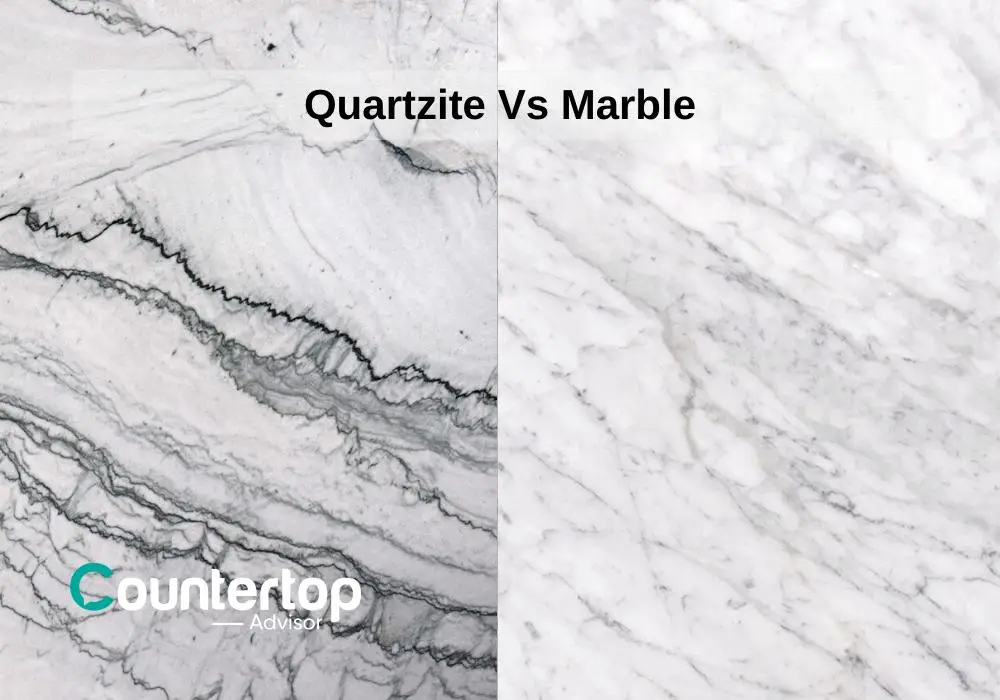
Technically yes, you can cut directly on a quartzite countertop without damaging the stone — but you shouldn’t, because you’ll destroy your knives doing it. Quartzite rates a 7 on the Mohs hardness scale, harder than the steel in any kitchen knife (about 5.5). That hardness difference means the blade loses every time: cut on quartzite and your knife dulls fast while the stone shrugs it off. After 10 years working with natural stone, here’s the honest answer on cutting on quartzite, what the hardness numbers actually mean for your kitchen, the rare cases where the stone can be marked, and why a cutting board is non-negotiable regardless.
The Short Answer
Quartzite is one of the hardest natural stone countertop materials available. On the Mohs hardness scale it sits at 7 — the same as quartz and granite, and well above marble (3) and dolomite (3.5-4). Kitchen knife steel is roughly 5.5 on the same scale. Since the harder material wins any contact, cutting on quartzite means the knife edge abrades against the stone, not the other way around. The countertop stays intact; the knife goes dull.
So the practical answer is: cutting on quartzite won’t ruin the countertop in normal use, but it’s still a bad habit. Use a cutting board, every time, to protect your knives and to avoid the rare exceptions below.
Quartzite vs. Quartz: Don’t Confuse Them
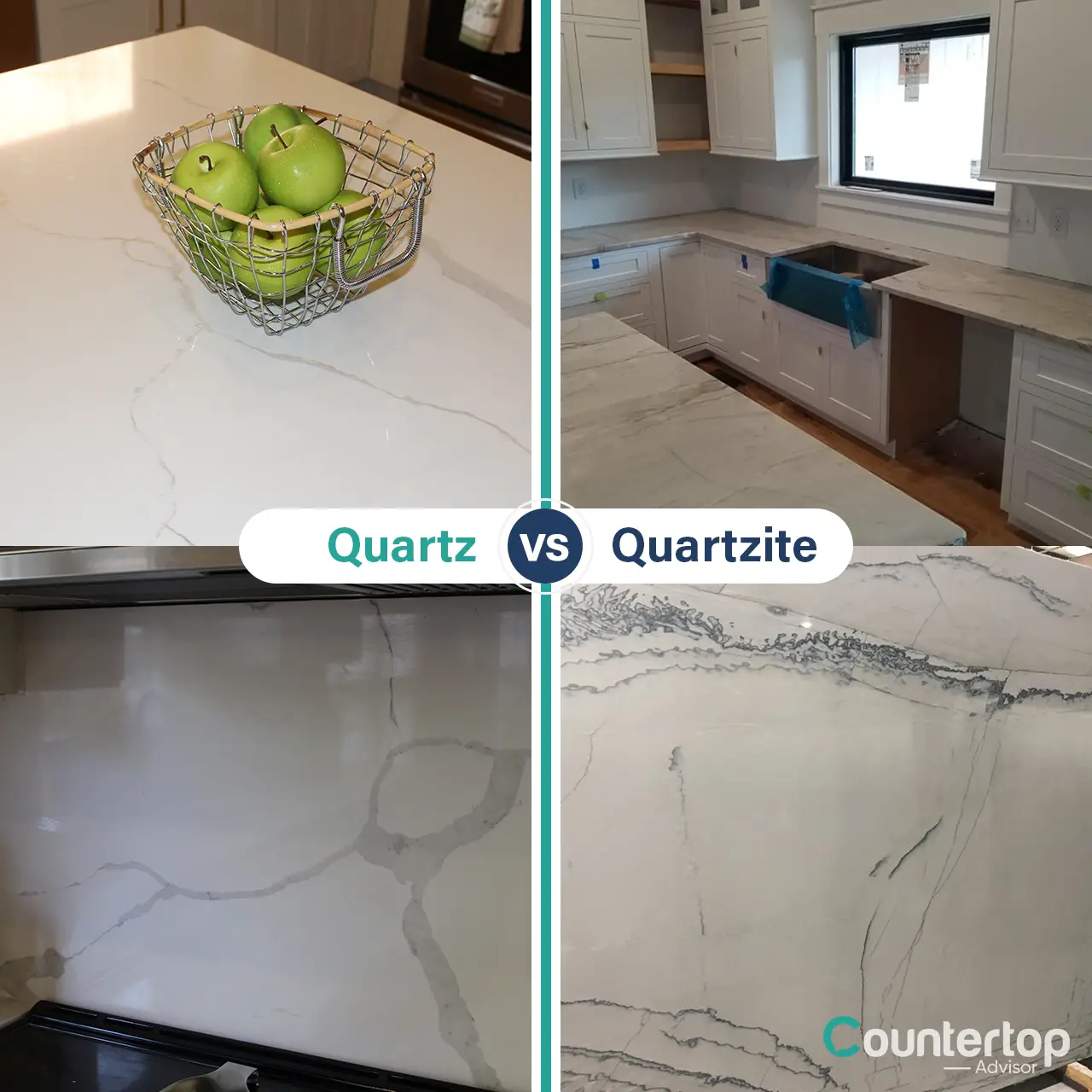
Before going further — quartzite and quartz are different materials and this trips up a lot of homeowners. Quartzite is a natural metamorphic rock, formed when sandstone is transformed under heat and pressure into a dense quartz-rich stone. Quartz countertops are an engineered product — ground natural quartz bound with polymer resin. Both are hard, but quartzite is all-natural stone while quartz is manufactured. The cutting answer differs slightly: cutting on engineered quartz risks scratching the resin binder, while cutting on natural quartzite mostly just dulls your knife. Either way, the recommendation is identical: use a board.
Why Cutting on Quartzite Wrecks Your Knives
A good chef’s knife holds a fine edge measured in microns. Drag that edge across a Mohs-7 stone surface and the abrasion rolls and dulls the edge with every stroke. Where a cutting board lets a blade hold its edge for weeks, cutting directly on quartzite can take a knife from razor-sharp to frustratingly dull in days. You’ll find yourself sharpening constantly — and each sharpening removes metal and shortens the knife’s life.
The math is simple: a quality chef’s knife costs $60-$200+. A good cutting board costs $20-$40 and protects every knife you own. There’s no scenario where cutting directly on the stone is the smart move.
The Rare Cases Where Quartzite CAN Be Marked
“Quartzite is harder than steel” is true as a general rule, but two real-world caveats matter:
1. Not all “quartzite” is fully quartzite. The stone industry sometimes sells softer stones — particularly dolomitic marbles — under the “quartzite” label, because the marketing name commands a higher price. The Natural Stone Institute has documented this mislabeling as an ongoing industry issue. A genuine quartzite scratches glass and resists a steel blade; a mislabeled soft quartzite or dolomite (Mohs 3-4) absolutely can be scratched and etched by a knife. If you’re not certain what you actually have, a simple test: a true quartzite will not be scratched by a steel knife blade pressed firmly across an inconspicuous spot. If it marks, you have a softer stone and cutting on it will cause visible damage.
2. Prolonged direct cutting can leave subtle marks. Even on genuine quartzite, years of cutting in the exact same spot can produce faint surface marks, especially in any softer mineral bands within the slab. It’s uncommon, but it happens — another reason the cutting board habit matters.
Other Quartzite Care Rules Worth Knowing
While we’re on durability — cutting isn’t the only quartzite question. A few related care points:
Heat: Quartzite is highly heat-resistant and won’t scorch from a hot pan. But repeated thermal shock (a very hot pan on a cold spot) can, rarely, cause stress cracks. Use a trivet for anything that stays hot a long time.
Sealing: Quartzite porosity varies slab to slab. Most quartzite benefits from periodic sealing to resist staining — test with the water-drop method and reseal when water stops beading. See my quartzite sealing guide for the full protocol.
Etching: Genuine quartzite is acid-resistant and won’t etch from citrus or vinegar the way marble does. But if your “quartzite” is actually a dolomitic marble, it will etch — another reason to confirm what you actually have.
Standing on it: Never sit or stand on a quartzite countertop. Unsupported point loads — especially near sink cutouts and overhangs — can cause stress fractures. This applies to all stone countertops.
What to Use Instead of Cutting on the Stone
Match the board to the task. Wood or bamboo boards are the best all-around choice — gentle on knife edges, naturally antimicrobial, and they look good enough to leave out. Plastic/poly boards are dishwasher-safe and best reserved for raw meat to avoid cross-contamination. Avoid glass and marble cutting boards entirely — they’re as hard as your countertop and dull knives just as fast. The whole point of a board is to give the blade a surface softer than the steel.
Frequently Asked Questions
Will cutting on quartzite scratch the countertop?
Genuine quartzite (Mohs 7) won’t be scratched by normal kitchen knife use — the steel is softer than the stone. The exceptions are mislabeled soft “quartzite” (actually dolomitic marble) and rare softer mineral bands within a slab. To be safe and to protect your knives, always use a cutting board.
Does cutting on quartzite dull knives?
Yes, quickly. Because quartzite is harder than knife steel, cutting directly on it abrades and rolls the blade edge with every stroke. A knife that would hold its edge for weeks on a wood board can go dull in days on quartzite. This is the main reason not to cut on the stone.
Is quartzite harder than granite?
They’re comparable — both rate around 7 on the Mohs scale. Some quartzites edge slightly harder, some granites edge slightly harder, depending on mineral composition. Both are hard enough that knife steel loses against them, and both should be protected with a cutting board. My granite vs quartzite comparison covers the full differences.
How do I know if I have real quartzite?
Real quartzite resists a steel blade and will scratch glass. Press a knife firmly across an inconspicuous spot — if it marks the surface, you likely have a softer stone (often dolomitic marble) sold under the quartzite name. Genuine quartzite also resists etching from acids like lemon juice and vinegar; if a drop of lemon juice dulls the spot after a few minutes, it’s not true quartzite.
What’s the best cutting board for a quartzite countertop kitchen?
A wood or bamboo board for general prep (gentle on knives, attractive) plus a separate plastic board for raw meat (dishwasher-sanitizable). Avoid glass or stone cutting boards — they’re as hard as the countertop and destroy knife edges.
For more on quartzite as a countertop material, see how to clean quartzite countertops and quartzite vs marble.