
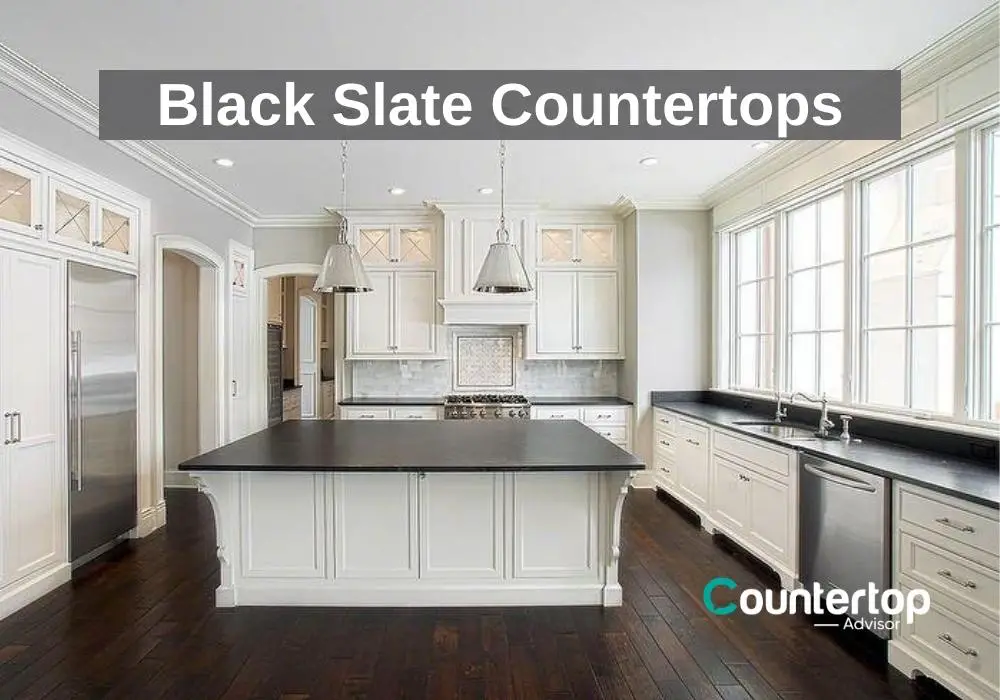
Black slate countertops are an underused, distinctive option — a natural stone that’s heat-resistant, non-porous, surprisingly affordable ($50–$115 per square foot installed), and almost never seen in the average kitchen. That rarity is part of the appeal. But slate has one make-or-break variable that matters more than with granite or quartz: quality. After 10 years working with natural stone, I’ll walk you through what black slate countertops actually are, the honest pros and cons, what they cost, how to design with them, and how to care for a surface that shows every smudge.
What Is Black Slate?
Slate is a fine-grained metamorphic rock formed from compressed clay and volcanic ash. It splits naturally into flat layers, which is why it’s been used for roofing, flooring, and chalkboards for centuries. As a countertop, slate brings a deep matte appearance and a soft, almost soapstone-like feel. “Black” slate ranges from true charcoal-black to very dark gray, often with subtle natural color variation — faint greens, purples, or rust tones — running through the stone.
The Pros of Black Slate Countertops
Naturally non-porous. Quality slate doesn’t readily absorb liquids, which means it resists staining and bacterial growth without the constant sealing that granite and marble require. This is slate’s biggest practical advantage.
Heat-resistant. Slate handles hot pots and pans directly from the stove without scorching — a genuine everyday convenience for serious cooks.
Durable and long-lived. Quality slate, well cared for, can last 100+ years. It’s a natural stone with a service life measured in lifetimes.
Affordable for natural stone. At $50–$115 per square foot installed, slate costs less than most granite, marble, and quartz. For a natural stone with this much character, it’s a value.
Distinctive appearance. The matte, deep, soft look of black slate is unlike the polished shine of granite or quartz. In a kitchen full of glossy surfaces, slate stands apart.
The Cons of Black Slate Countertops
Quality varies enormously — and it matters. This is the critical caveat. High-quality slate is dense, durable, and non-porous. Low-quality slate is porous, hard to seal, and prone to crumbling, flaking, chipping, scratching, and etching. With slate, you genuinely get what you pay for. Buying the cheapest slab is the fastest route to regret. Always work with a reputable supplier and inspect the actual slab.
It shows everything. A dark matte surface displays water spots, dust, fingerprints, and oil smudges far more readily than a busy granite. Black slate is a high-visibility surface that needs frequent wiping to look its best.
Somewhat brittle at the edges. Slate can chip if struck hard, especially lower-quality stone and especially at edges and corners. It tolerates normal use but not heavy impacts.
Limited color range. Slate comes in dark, earthy tones — black, gray, charcoal, with subtle natural accents. If you want a light or colorful countertop, slate isn’t the material.
What Black Slate Countertops Cost
Installed cost runs $50 to $115 per square foot, or roughly $1,500 to $4,000 for an average kitchen. That places slate below granite, marble, and quartz on price — national cost data tracks the same range. As noted, the low end of the range often means lower-quality stone — budget for the middle of the range to get slate that performs the way slate should. For comparison with other materials, see my granite pros and cons guide and how long countertops last.
Designing With Black Slate Countertops
Black slate with white cabinets. The most popular and most reliable pairing. White cabinets, dark hardwood floors, a marble or white subway tile backsplash, and stainless appliances create a crisp, modern, high-contrast kitchen. The black slate becomes the anchor.
Black slate with white subway tile. The matte black counter against bright white subway tile is a bold, clean look that draws the eye. Add stainless appliances and a touch of greenery and the kitchen reads contemporary and intentional.
Black slate with dark cabinets. A moodier, dramatic choice. It works — keep the stainless appliances to break up the darkness, and make sure the kitchen has good lighting, because dark cabinets plus dark counters absorb a lot of light.
How to Clean and Care for Black Slate Countertops
Slate’s non-porous nature makes daily care simple, but the dark surface demands consistency:
Keep microfiber cloths handy. Stash 5–10 in the kitchen. Black slate shows water marks instantly — wiping dry after every cleanup keeps it looking sharp.
Daily cleaning: warm water and mild pH-neutral dish soap, then dry with microfiber. That’s it for routine care.
Cleaners to avoid: anything acidic (lemon, vinegar, citrus cleaners), bleach, ammonia-based cleaners like Windex, and any wax-based product. Acids can etch the finish, bleach can soak in, and wax leaves dull patches and potential staining. Use only products made specifically for natural stone or slate — my disinfecting countertops guide covers stone-safe cleaning products by material.
For protection and color restoration: a slate-specific conditioning product — such as a slate sealer and conditioner — can deepen and restore the stone’s natural color and add a layer of stain protection. Apply per the product’s directions, typically a few times a year.
Many homeowners also lightly oil black slate (with mineral oil) to enrich the color, similar to soapstone care — this is optional and a matter of preference.
Frequently Asked Questions
Are black slate countertops a good choice for kitchens?
Yes, if you buy quality slate. High-quality slate is non-porous, heat-resistant, durable, and distinctive, at a lower price than granite or quartz. The risk is low-quality slate, which is porous and prone to flaking and chipping. Quality is the whole game with slate.
Do slate countertops need to be sealed?
Quality slate is naturally non-porous and needs far less sealing than granite or marble — some doesn’t need it at all. A periodic slate conditioner/sealer is still worth applying to enhance color and add stain protection, but it’s not the frequent maintenance task granite sealing is.
How much do black slate countertops cost?
$50 to $115 per square foot installed, or about $1,500 to $4,000 for an average kitchen — less than granite, marble, or quartz. Budget for the middle of the range, since the cheapest slate is often lower quality.
Do black slate countertops scratch easily?
Quality slate resists scratches well; lower-quality slate scratches more easily. All slate is somewhat brittle at edges and can chip from hard impacts. The dark matte surface also shows scratches and smudges more visibly than a patterned stone, so it looks best with regular wiping.
What should you not use on slate countertops?
Avoid acidic cleaners (lemon, vinegar, citrus), bleach, ammonia cleaners like Windex, and wax-based products. These can etch, stain, or dull the surface. Use only pH-neutral or slate-specific cleaners.