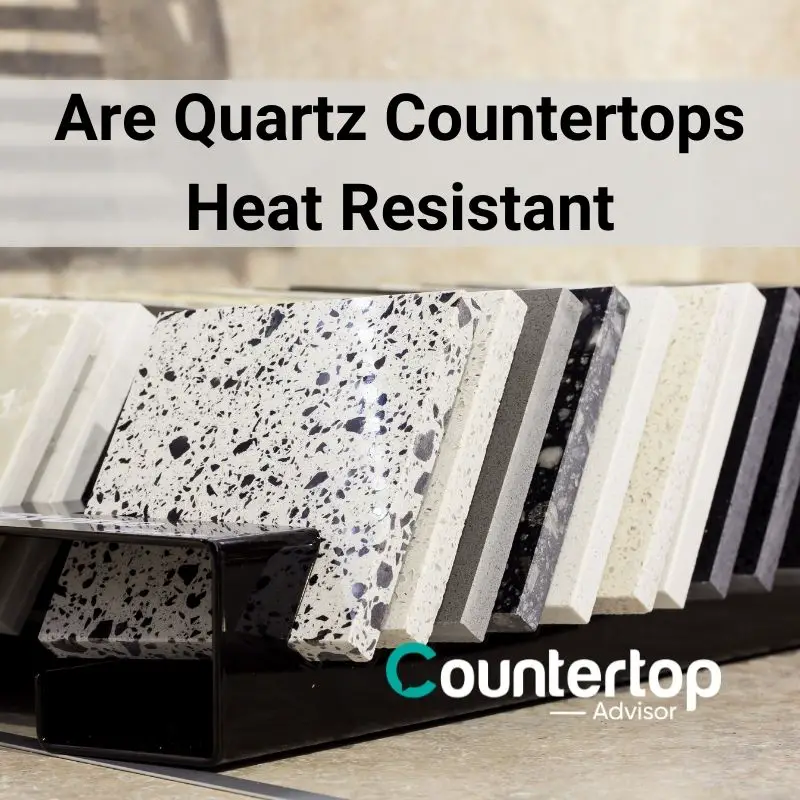
Quartz countertops are heat resistant but not heatproof — an important distinction. Most quartz tolerates brief contact up to roughly 300°F, but sustained or higher heat can scorch, discolor, or crack the surface, and some manufacturers cite damage thresholds as low as 150–200°F. The reason is simple chemistry: quartz countertops are about 90% ground quartz held together with roughly 10% polymer resin, and that resin is the heat-vulnerable component. After 10 years working with quartz, here’s exactly how heat-resistant quartz really is, what temperatures damage it, and how to protect it.
How Heat Resistant Is Quartz, Really?
Quartz countertops handle everyday warmth without issue — a warm plate, a cup of coffee, a mug of tea cause no harm. The trouble starts with real cooking heat. Most quality quartz tolerates brief contact with items up to about 300°F, but this varies by manufacturer, and many cite a more conservative threshold. The honest takeaway from a decade of working with the material: treat quartz as if anything hotter than a warm plate needs a trivet. The mineral quartz itself is extremely heat-tolerant; it’s the resin binder holding the countertop together that fails first.
Why the Resin Is the Weak Point
A quartz countertop is roughly 90% natural ground quartz plus about 10% polymer resin and pigments. The quartz could shrug off a hot pan; the resin cannot. When the resin is heated past its tolerance, it can change chemical state — softening, scorching, or shifting color. That’s why heat damage on quartz usually shows up first as discoloration, a dull or whitened patch, or a yellow-brown scorch mark, rather than an outright crack.
Are All Quartz Countertops Equally Heat Resistant?
No. Heat tolerance varies by brand and by the specific resin formulation. Lighter-colored quartz often shows heat discoloration more visibly than dark quartz. The only reliable source for your specific countertop’s heat limit is the manufacturer’s care guidelines — brands like Caesarstone publish theirs — check them, because exceeding the rated temperature can also void the warranty.
Heat Damage vs. Cracking: Two Different Problems
Heat damage — discoloration, scorching, dull or whitened patches — comes from the resin degrading. It’s the most common form of quartz heat damage and usually permanent.
Thermal shock cracking is different and rarer. It happens when one area of the slab heats rapidly while the surrounding stone stays cool — the uneven expansion stresses the material and can crack it. Setting a screaming-hot pan on a cold quartz surface, especially near a sink cutout or a thin area, is the classic trigger. Both problems have the same prevention: don’t put high heat directly on quartz.
Everyday Heat Questions
Can you put hot cups on quartz? Yes — a coffee mug or teacup is well within quartz’s tolerance. No trivet needed for normal hot drinks.
Can you put a toaster or coffee maker on quartz? Generally yes, but small appliances that run warm for long periods are better placed on a mat or trivet, since it’s sustained heat — not just peak temperature — that degrades resin over time.
Can you iron on a quartz countertop? No. A clothes iron reaches temperatures well beyond quartz’s tolerance and concentrates heat in one spot. Don’t iron on quartz.
Can you put a hot pan or baking sheet on quartz? No — this is the #1 cause of quartz heat damage. A pan straight off the burner or out of the oven can exceed 400–500°F. Always use a trivet.
How to Protect Quartz Countertops From Heat
- Use trivets and hot pads — always. Keep a set of trivets or hot pads within reach of the stove and oven. This single habit prevents virtually all quartz heat damage.
- Never set cookware directly from heat onto quartz — pans, baking sheets, slow cooker bases, hot serving dishes.
- Put a mat under heat-generating appliances — toasters, coffee makers, instant pots, air fryers — if they sit on the counter and run warm.
- Mind the area near cooktops. The quartz immediately around a range gets the most thermal exposure; be especially careful there.
- Know your countertop. Check your manufacturer’s care guide for the rated heat tolerance and follow it — exceeding it can void the warranty.
Quartz vs. Granite Heat Resistance
This is the honest tradeoff between the two most popular countertops. Granite wins on heat decisively. Granite is 100% natural stone with no resin binder, so it handles a hot pan straight from the oven without harm. Quartz, with its polymer resin, does not. If you’re a heavy cook who hates fussing with trivets, granite has a real advantage here. Quartz wins on other fronts — it’s non-porous and never needs sealing — but on heat, granite is the more forgiving surface. See my full granite vs quartz comparison and granite pros and cons guide.
Frequently Asked Questions
Are quartz countertops heat resistant?
Yes, but not heatproof. Most quartz tolerates brief contact up to about 300°F, with some manufacturers citing lower limits. Sustained or higher heat damages the polymer resin binder, causing discoloration or cracking. Always use trivets for hot cookware.
What temperature damages quartz countertops?
Damage can begin anywhere above roughly 150–300°F depending on the brand and resin formulation. A hot pan off the stove or out of the oven easily reaches 400–500°F — well past quartz’s limit. Check your manufacturer’s rated tolerance.
Can you put hot pots and pans on quartz?
No. Hot cookware is the leading cause of quartz heat damage — it can scorch, discolor, or thermally shock the surface. Always place hot pots, pans, and baking sheets on a trivet or hot pad, never directly on quartz.
Is quartz or granite more heat resistant?
Granite. It’s natural stone with no resin binder and handles direct heat from hot pans without harm. Quartz’s polymer resin makes it vulnerable to heat. If heat resistance is a priority, granite is the better choice.
Does heat damage to quartz get repaired?
Heat discoloration and scorching are usually permanent — minor cases may improve slightly with quartz polish, but significant damage typically needs professional resurfacing or section replacement. Prevention with trivets is far easier than any repair. See my post on a gritty quartz countertop, a related heat-damage symptom.