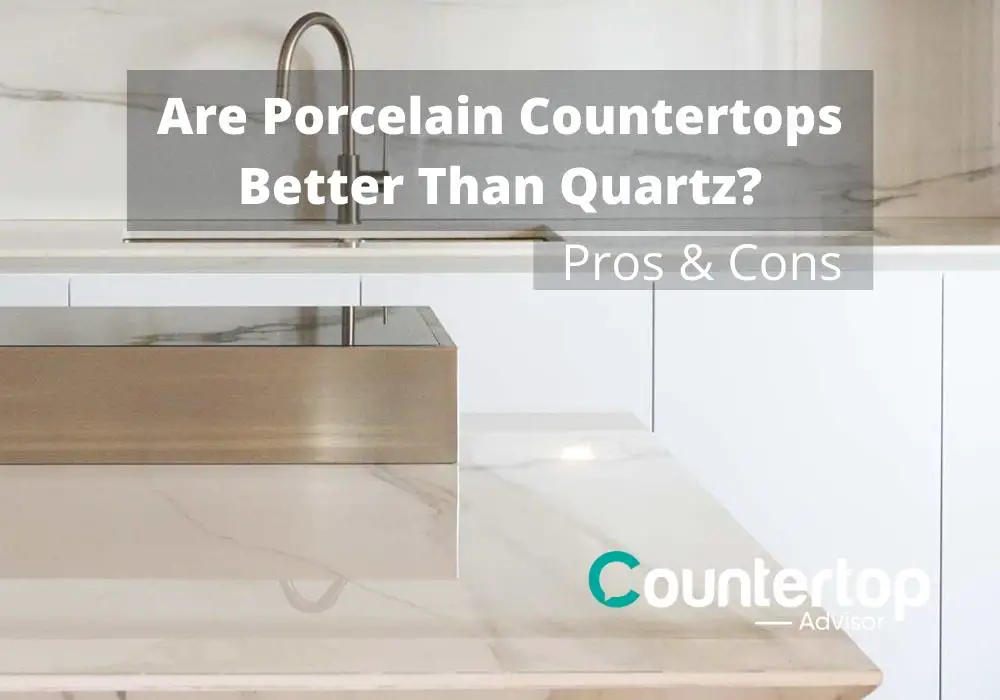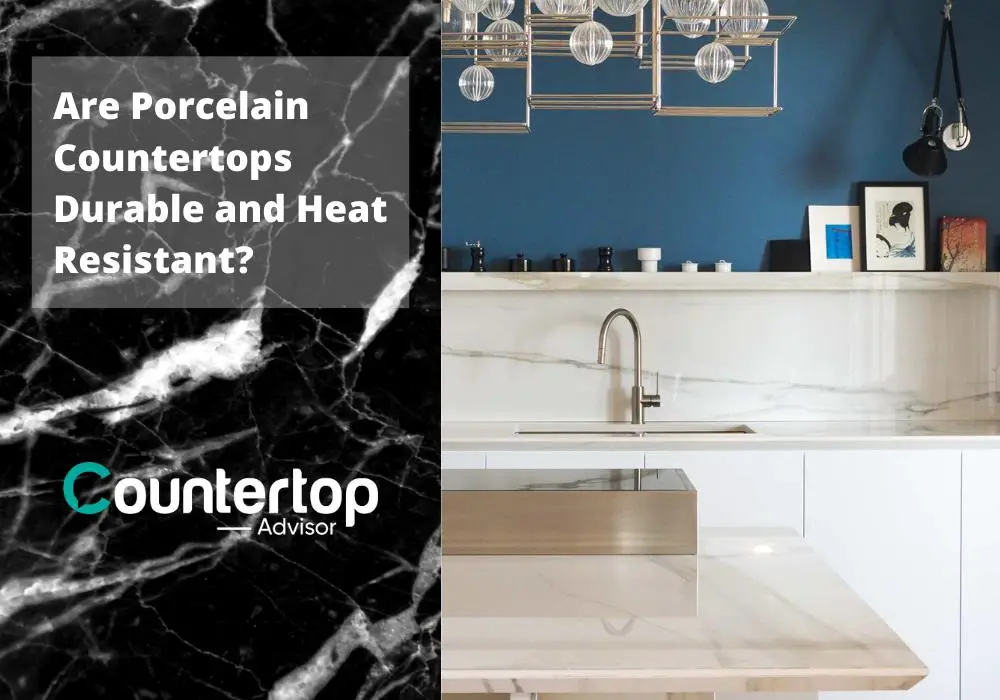
Porcelain countertops are both highly durable and genuinely heat resistant — among the toughest countertop surfaces available. Porcelain is fired at around 2,500°F during manufacturing, so a hot pan straight off the stove won’t faze it; it’s non-porous so it never needs sealing and never stains; and it’s harder and more scratch-resistant than granite. It has real weaknesses too — it can chip at edges and offers limited edge-profile options. After 10 years working with countertop materials, here’s the honest assessment of porcelain’s durability, heat resistance, pros, cons, and cost.
What Porcelain Countertops Are Made Of
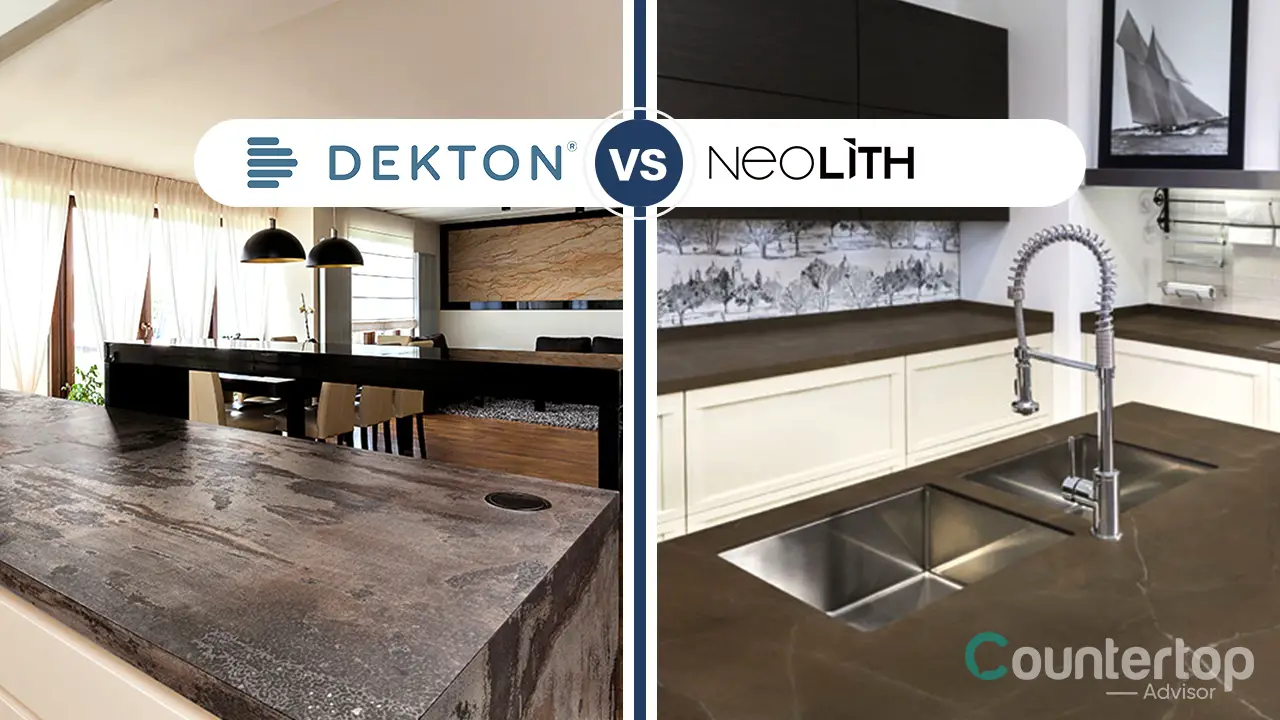
Porcelain countertops (also called sintered or ultra-compact surfaces) are made from natural clay — primarily kaolin clay — blended with silica, feldspar, and mineral pigments, then fired at extreme temperatures, around 2,500°F. That intense firing fuses the materials into an exceptionally dense, hard, non-porous slab. The same firing process is why porcelain shrugs off kitchen heat: the material was forged at temperatures no stove or oven can approach. Brands like Dekton and Neolith are well-known porcelain/ultra-compact surfaces.
Is Porcelain Durable?
Yes — very. Porcelain is roughly 30% harder than granite and highly scratch-resistant; everyday knives, pots, and utensils won’t mark it. It’s non-porous, so it doesn’t stain or absorb liquids and never needs sealing. It’s also UV-stable, which means it won’t fade in sunlight (a real advantage given UV radiation’s degrading effect on many materials) — one of the few countertops genuinely suited to outdoor kitchens.
The honest weakness: porcelain can chip and crack from heavy impact, particularly along edges and corners. It’s hard, but hardness and impact-toughness aren’t the same thing — a hard material can also be somewhat brittle. A heavy pot dropped on an edge is the realistic risk. The broad flat field of the counter is very tough; the edges need a bit of care.
Is Porcelain Heat Resistant?
Excellent — among the best of any countertop. Because porcelain is manufactured at roughly 2,500°F, ordinary kitchen heat is trivial to it. You can place hot pans and pots directly on porcelain without scorching, burning, or discoloring it. Unlike quartz, which has a heat-vulnerable resin binder, porcelain has no resin — it’s all fired mineral. On heat resistance, porcelain is in the same top tier as granite. The usual stone advice still applies for thermal-shock caution, but porcelain handles heat about as well as a countertop can.
Pros and Cons of Porcelain Countertops
Pros
- Non-porous — never stains, never needs sealing.
- Excellent heat resistance — hot pans go directly on it.
- Very hard and scratch-resistant — harder than granite.
- UV-stable — won’t fade in sunlight; suitable for outdoor kitchens.
- Hygienic — non-porous and easy to clean.
- Lightweight — porcelain slabs are thin and light enough to install over an existing countertop in some cases.
- Huge design range — hundreds of colors and patterns, including very convincing marble, concrete, and stone looks.
Cons
- Can chip and crack from impact, especially at edges.
- Limited edge profiles — the thin slab restricts decorative edge options; thick edges require a build-up.
- Pattern depth — the design doesn’t always run through the full slab thickness, so an exposed cut edge may not match the surface.
- Fewer qualified fabricators — porcelain needs specialized cutting tools and experience; not every shop handles it well.
- Lower resale recognition — buyers know and value granite and quartz; porcelain is less familiar, so it carries less name-recognition resale weight.
Porcelain Countertop Cost
Porcelain typically runs $60–$120 per square foot installed, placing it in the mid-range — generally below high-end natural stone, comparable to mid-tier quartz. Specialized fabrication can push the upper end higher, since porcelain requires specific tooling and expertise. For what you get — non-porous, no-seal, heat-resistant, UV-stable — porcelain is reasonably priced among quality countertop materials.
How Porcelain Compares to Other Countertops
| Factor | Porcelain | Granite | Quartz |
|---|---|---|---|
| Heat resistance | Excellent | Excellent | Fair |
| Scratch resistance | Excellent | Excellent | Excellent |
| Sealing | Never | Periodic | Never |
| Chip resistance | Fair (edges) | Fair (edges) | Good |
| Cost / sq ft installed | $60–$120 | $40–$100 | $50–$200 |
For deeper comparisons see my granite vs quartz guide and Dekton vs Neolith (both are porcelain/ultra-compact brands).
Cleaning and Caring for Porcelain
Porcelain is one of the easiest countertops to maintain. Daily cleaning is warm water and mild pH-neutral dish soap with a microfiber cloth — no sealing, ever. Because it’s non-porous, spills wipe off without staining. Avoid abrasive scouring pads (which can dull any polished surface) and treat the edges with reasonable care to avoid impact chips. That’s the entire maintenance routine.
Who Should Choose Porcelain
Porcelain is a strong choice if: you want maximum heat and scratch resistance with zero sealing; you’re building an outdoor kitchen (porcelain’s UV stability is a real advantage); you want a thin, lightweight slab that can sometimes overlay an existing counter; or you want a specific marble or concrete look with better durability than the real thing.
Look elsewhere if: you want dramatic thick or decorative edge profiles; resale name-recognition matters a lot to you; or you can’t find a fabricator experienced with porcelain in your area — poor fabrication is the main way porcelain installs go wrong.
Frequently Asked Questions
Are porcelain countertops durable?
Yes — very. Porcelain is about 30% harder than granite, highly scratch-resistant, non-porous, and UV-stable. Its one weakness is impact: it can chip or crack at edges from a heavy dropped object, though the flat field of the counter is extremely tough.
Are porcelain countertops heat resistant?
Excellent heat resistance — among the best of any countertop. Porcelain is manufactured at around 2,500°F, so ordinary kitchen heat doesn’t affect it. You can place hot pans directly on porcelain without scorching or discoloring it, unlike quartz.
Do porcelain countertops need to be sealed?
No. Porcelain is non-porous, so it never needs sealing — one of its main advantages over natural stone like granite and marble.
How much do porcelain countertops cost?
Typically $60–$120 per square foot installed — mid-range, generally below high-end natural stone and comparable to mid-tier quartz. Specialized fabrication can raise the upper end.
What is the downside of porcelain countertops?
The main drawbacks: vulnerability to chipping at edges from impact, limited decorative edge-profile options, surface patterns that may not run through the full slab thickness, fewer experienced fabricators, and less resale name-recognition than granite or quartz.
Choosing between the two leading sintered stone brands? See Dekton vs Neolith for the head-to-head on thickness, cost, dealer network, and outdoor use.